What follows is the text of the biography I put together for the occasion of Lynda's memorial. Since it remains to be fact-checked, improved and revised, it should not be considered a finished work.
Ultimately, I plan to incorporate this text along with a number of personal memoirs and the photographs that I collected for the album into a bound book. Though I got a lot of material in this first 'pass' so to speak, I still do not have it all. I spoke with several people who are sending me photos or tributes to be included, so it will be a month or two before I can realize my final goal and tribute to Lynda, which will be a limited edition hardbound book.
There are any number of internet publishing sites that allow one to upload the materials, lay them out in a book form and have it printed and bound professionally. Though this is primarily a selfish effort to make use of the work I have put into the memorial, I also think that there are a number of people, family and friends alike, who might enjoy reading this volume and having it on their shelf as a memento of Lynda.
*******************************************************
Gladys Lynda Allen, daughter of Oglesby and Rosiland (nee Heller) Allen, was born in Chicago, Illinois on August 1, 1917. Her sister Anita was born two years later. Her first memory, as she often recalled, was of being held aloft on a balcony above a Victory Day parade in Chicago when she was four, which was two years before the family moved to Biloxi, Mississippi in 1923 to run a family grocery store owned by relatives of Rosalind.
A pivotal moment in Lynda's early life came when she won an art collection competition in grade school in 1928, sowing the seeds for her long career as an artist later in life. In 1932, her father left the family, leaving Lynda to support her mother and her sister, which she did after graduating from high school in 1934. She wanted to attend college, but for practical reasons, settled on a trade school in Wheatland Wyoming, where she was trained as a lab technician specializing in reading blood types. She received her professional certificate from the school in Wheatland in 1936-37. She returned briefly to Biloxi before moving, with her mother and sister to Shreveport, Louisiana in 1938. Here she took a job in a community hospital and, eager for an 'intellectual' life, became active in a local small theater company.
In 1940, in this theater group, she met Jack Smith, son of L.E. and Anne Smith of Shreveport. She and this adopted bookish son of a Louisiana sportsman immediately fell in love and were married the following year, in 1941, in Shreveport. This was just prior to the beginning of American involvement in World War II. In 1942, Jack tried to enlist in the military but was rejected at first for poor eyesight. He persisted and gained a stateside commission as a Lieutenant at an internment camp for German prisoners of war in Fort Jackson, South Carolina. It was here, two years later, their first child, Stephen, was born in 1943. In 1945, Lynda became pregnant with their second child, Anne. Tragically, Jack was killed in a traffic accident later that same year. Anne was born in 1946, and shortly after, Lynda moved to New York city, with her two small children and mother in tow.
This was a particularly active time in her life. She worked as a lab technician in a private hospital in New York city, enrolled her children in a private school called The Steiner School and generally enjoyed the life of a single mother in a big city. New York City in the late forties was a vibrant place, and for Lynda, it was an intellectual's 'dream' tour. She went to the symphony and heard Toscanini conduct and play, fell in love with the music of Wagner, went to jazz clubs, attended the Metropolitan Opera, the New York City Ballet, and saw many Broadway and off-Broadway plays and shows. She went to the Museum of Modern Art when it was a 'new' thing, and spent hours combing through art galleries and shops in Manhattan.
She kept up her interest in the theater. She soon joined a small theater group called the "Little Theater", where she played roles in several productions. In one of these, "Cat on a Hot Tin Roof", she played the role of Big Momma, and the man who played opposite her, in the role of Big Daddy, was Wilbur Earl (W.E. 'Bill) Dubov. She had actually met Bill a few years earlier in Shreveport. When they met again in New York in 1954, they began seeing each other. They were married in 1955 on Thanksgiving day, and moved to upstate New York. They settled Deansboro, which was close to Utica, where Bill has taken a job as a photographer in the public relations department of the Bendix company. When they met, Bill was working in a camera store in Manhattan, having just returned from a trip to the Antarctic as a photographer for Life magazine. He shared with Lynda a love for those things intellectual, including art and books.
Bill adopted Stephen and Anne, then ages 13 and 10, just before his and Lynda's first child, Phillip, was born in 1956. At the time, the couple was anxious to move out of the cold weather and were looking south for a new place to live and work. They settled on Abilene, Texas, where, after but a single trip down to look it over, they purchased a bookstore called, appropriately enough, the Abilene Bookstore. They moved to Abilene in 1957. They situated the bookstore in a large two-story frame house and lived above it. Their second son and Lynda's fourth child, David, was born in Abilene in 1961.
Though the move to Abilene had seemed promising at the time, the lack of research proved fateful. The community was far more conservative than they had anticipated, despite the presence of several colleges and Hardin Simmons University. This was the McCarthy era and many people were suspicious of the books they supposedly carried. In reality, they probably sold more Bibles than any other single book, but they also managed to expand the choices available to readers in Abilene prior to their arrival, developing it into a cornerstone of the small intellectual community in this West Texas town.
Lynda and Bill were also active in the tiny Jewish and Unitarian communities and met often with what few artists and intellectuals there were at that time in that predominantly Christian town. With these friends they helped create the Abilene Museum of Art, and Lynda was among the first students in the first art class ever taught in that institution. Her first painting was a still life and went on display in the first ever art show in Abilene, sometime in 1963 or 1964.
Stephen graduated from high school and moved away to attend the Kansas City Art Institute in 1961. He went on to graduate with a masters degree from Stanford and teaches art in Austin, Texas. Anne finished high school in Abilene as well and went away to attend the University of Texas in Austin in 1964. She eventually moved to New York City, where she met and married her husband Eric Shapiro.
Lynda was an life-long active lover of books, reading and literacy. Not only did she and her husband own a bookstore, Lynda also volunteered at the library, when she met her lifelong best friends, Len and Lisel Radoff. Lynda spent many hours riding around in the Abilene Library's first (and perhaps only) Bookmobile, which traveled to outlying rural communities where there were no libraries or bookstores. She and Bill were, with the Radoffs, active (and charter) members of the Abilene chapter of the Great Books Society.
The demand for books in Abilene was just not sufficient to make a living at the time, though, and in 1965, Lynda and Bill sold the bookstore (but not the house) and Bill began to look for work in other cities. He went first to Dallas, where his sister Rae and her husband Ronald Weiss lived, then to Houston and eventually to San Antonio, where he found work as a manager of a camera department in a large discount store called Shoppers World. He moved up there first and Lynda joined him with Phillip and David in 1968.
San Antonio was a time of great energy and activity but also hard times for the family financially. Lynda and Bill were once again active in the theater, joining a group at Saint Mary's College. Their involvement with a Dominican friar named Bother Alexis landed Lynda the job of 'stage manager' for a small theater troupe that performed daily on a plaza at the 1968 World's Fair, called HemisFair '68. She also spent a lot of time on behalf of Brother Alexis' charity organization, touring community centers in poor Hispanic communities, teaching and promoting art.
At this time Lynda was just beginning to paint regularly, though it meant painting only after the dinner dishes had been put away. It also meant storing her canvases beside and her paints on top of the refrigerator in the tiny, three bedroom apartment in which the family lived on San Antonio's poor South side. She also wrote her first play in 1968, called "Black and White Checkerboard Society" and saw it produced at the theater at St. Mary's College that same year.
Despite this flourishing of artistic energy, Bill's income was insufficient to support the family and Lynda began to look for work as well. Her found that her training as a lab technician was no longer of value, and she turned to sales. She tried selling Fuller brushes at first, then moved to Encyclopedia Britannica and eventually to life insurance, where she finally broke through and was able to make some money.
Working for the Banker's Life and Casualty company as the first and only female agent ever was a very difficult way to make a living, though. Lynda spent many hours traveling the dusty back roads of San Antonio, selling insurance and collecting the premiums as well. Sometimes folks couldn't pay cash and paid in eggs or butter or bread. While this didn't pay the premiums, it did put food on the table and Lynda often made up the difference out of her own pocket. This attitude towards the welfare of her clients, while seemingly unprofitable to many in the business, proved to be the foundation of her eventual success as an insurance agent, which allowed her to travel the world and eventually retire with an income to paint and draw for many years.
In 1968, Bill found work at in Austin, as the staff photographer for the State School for the Mentally Retarded (as it was called back then), and the family moved again. In Austin, Lynda found work for a much more reputable company called the Great West Life Insurance Company, again as their first-ever and only female agent. Her skills as an agent, as opposed to a saleswoman, were key to her success, and soon her income began to increase exponentially.
In 1969, her mother Rosalind died in St Louis, where she had been living in a nursing home near Lynda's sister Anita. Lynda missed the funeral but the family traveled north to attend a memorial for her later in the year. Lynda and her sister were never particularly close, but they did keep up a regular correspondence throughout her life. Anita traveled to Austin once, in 1984.
Lynda's career as an insurance agent became the family's sole source of income in 1970, when Bill suffered the first of a series of heart attacks that rendered him unable to work for the rest of his life. In addition to nursing her husband back to a state of semi-stable health and raising her two teenage boys during these years, Lynda worked full time and did well at it, though she had little time to pursue her art. She and Bill did attend the symphony, opera and ballet as often as he was able, and they were also active members of a Great Books Society group that met once a month, often in their home. Lynda was anxious to move and move on yet again, and after answering in small ad in the back of an insurance trade magazine, committed to go work in Europe for the John Hancock Life Insurance company in 1974.
Her son Phillip graduated from high school that same year, and he elected to remain in Austin as Lynda, Bill and David packed up and moved to England. They settled in a small town about sixty miles north of London called Bedford. Based here, she sold insurance to G.I.'s on two nearby military bases (Alconbury and Chicksands) and did so well at it that she rose to become the number two agent, in terms of sales, in all of Europe. Meanwhile, in spite of his deteriorating heart condition, Bill enjoyed a period of relatively stable health, and was thus able to enjoy the fruits of Lynda's success with her as they traveled throughout Europe, Russia, China and the Middle East. David graduated from 'high' school in Bedford and moved back to the U.S. to attend college at Bennington, Vermont.
Lynda was surprisingly prolific as an artist during these years, despite the cramped living quarters and a hectic schedule. She managed to paint enough to participate in an exhibition in London in 1976, the same year she wrote her second play, "The Daughters of 1776". She and Bill often traveled to London on weekends, attending as usual, the symphony, opera and ballet, as well as many, many hours walking the marbled halls of the British Museum. They walked the back streets of London as often as they could, exploring art galleries and discovering out of the way restaurants and pubs in the art district. Phillip moved back 'home' briefly in 1975, then moved on to attend the American College in Paris in 1976.
Bill's health continued to fail, and after a brief trip to visit Phillip in Paris in 1981, he died at home in Bedford. Lynda buried her second husband and moved to a small apartment in London, where she continued to paint and visit galleries and museums. Eventually, the isolation of living alone in a foreign country became too much work to be enjoyable, and she moved back to the U.S. in 1983 to be near her daughter Anne, son-in-law Eric, and her two grandchildren, Jennifer and Daniel.
She spent a great deal of time with the grandchildren as they were growing up, but she also manged to get into new York City for a taste of the city life again. The rounds are by now familiar ones: museums, galleries, theater, symphonies and opera. She often made these rounds with her cousin Bernice "Bunny" Heller, who lived in an apartment in Manhattan. The two cousins even made a pilgrimage to Ireland during this time, with Lynda doing all the driving and arrangements for her wheelchair-bound cousin.
She continued to paint and draw during this period, and her interest in learning brought her to attend the prestigious Ragsdale Art Colony in upstate New York in 1984. Although she enjoyed writing and wrote her third play at this time, in Ragsdale she made a firm commitment to herself to pursue the life of a painter at long last. The cold winters and snow in New York once again made her look south for a place to live. She soon settled on Austin, where her son Phillip was living and going to school at UT and moved back again in 1985. In the interim, Phillip had met and married Valery Caselli. Their first child (Lynda's third grandchild), Pierre, was born in 1987. He was followed just three years later in 1990 by Lynda's fourth and last grandchild, Madelaine.
As she did in New York, in Austin Lynda spent a great deal of her time caring for her young grandchildren, teaching them about life and art from an early age. She was especially close to Pierre, as he seemed to share her passion for art. As she did with her own children, she took him to museums, symphonies and operas and spent a great deal of time with time in her studio.
The studio that she set up on moving to Austin in 1986 had several locations, but it was always the very heart of her life. Almost every day she managed to spend at least some time in and among her many works, whether it was crowded into a tiny hot space above a warehouse on east Sixth Street or in the busy and noisy ArtPlex on Guadalupe. With a single aging box fan running constantly to cool the summer heat and the powerful creative energy that burned within, she churned out dozens and dozens of large brightly colored paintings, filled dozens of books with her drawings, sculpted figurines and made mobiles, collages and wrote in her journal when she wasn't covered in paint. Often she simply sat in the heat and napped among her works, listening to Wagner on the radio and dreaming, no doubt, of making more art.
In 1987, Phillip organized a 70th birthday tribute to honor her already long life, not knowing that it was, in many ways, still getting started. At an age when many folks slow down, she actually picked up the pace. She set an example for many people, artists and women all ages, of how a life many be lived energetically even when years begin to advertise the opposite. She began a life-changing habit of exercise at this time, getting back in to the swimming pool to enjoy water aerobics. She joined a health club, The Hills of Lakeway, and attended bi-weekly water aerobics sessions there for twenty-plus years. Doubtless, the exercise helped not only prolong her life, but made it more enjoyable as well. Always gregarious, she met many friends in the pool, many of whom were also in the artistic community that was the other half of her life.
The new millennium brought Lynda a fourth grandchild, Madelaine, and saw a move to join the ArtPlex community in an old state office buildking on Guadalupe. It was by far her most active studio to date. Here, she was in the company of many other like-minded people, for not only artists gathered at the Artplex, but musicians, craftsmen and tradespeople also occupied the building, which was literally a hive of activity for the nearly five years that she was part of it. Lynda was, quite simply, a central figure in the Artplex and the Austin Visual Arts Association. Often one could find her sitting in the Association gallery for hours because that was where she felt she could best contribute to the cause.
So, for about five years, from 2000 to 2005, the studio in the ArtPlex was the very center of her life. She literally had an 'open-door' policy in her studio and could be found there most every day for those five years, painting, drawing, reading, listening to the radio or perhaps, napping in the big red naugahyde chair that sat in the center of the tiny cramped and filled-to-overflowing space. Many, many friends and fellow artists report that they spent many a long afternoon in the studio with Lynda, talking about life and art. Lynda had a way of listening that made each person feel as if she were the only person who mattered to her, and honestly, at that moment, she did indeed care. It was a therapy of sorts for many of her artist friends, many of whom would bring others by for the same 'treatment.' Lynda treated them all with the utmost respect and concern.
During this time Lynda created her series 'Voices of the Ghetto'. A series of black and white pen and ink drawings, it was her unique vision of the many souls who were lost in the Holocaust. Although she was not a regularly practicing Jew, Lynda felt a strong affinity for what she considered to be her Jewish cultural heritage. The emotions that were eventually released in this powerful series of evocative faces existed only in her imagination, but many viewers remarked that they sparked intense feelings and evoked memories of those who had been there. She displayed this works in a series of temples, synagogues and community centers in Dallas, Temple, Austin and Houston. Eventually she donated the series to the Holocaust Museum in Atlanta Georgia, where she attended a seminar some years earlier.
Although the 'Voices' were her most public pieces during this very prolific period, she continued to paint large-scale acrylic canvases that were literally filled, corner to corner, with color and vibrant forms. These works formed a sharp contrast, which she loved to bring attention to, between the intense, almost violent visual nature of her paintings and her mild 'little-old-lady-in-tennis-shoes' outward physical appearance.
She was indeed a little old lady, and often wore canvas shoes, but in no way was she a mild person, in her youth or in her old age. The color and shapes in her paintings were expressions of the person that Lynda was, while the mild little old lady image she carried was what she somehow thought she must be. Her southern upbringing clashed sharply with the intellectualism she had come to idealize.
Somehow, however, as an artist, she managed to create paintings that expressed her inner anger while as a woman, she simultaneously created a persona that expressed both her intelligence and her civility. Those who knew both sides of her personality were not surprised by the seeming contradiction. Like subjects of the paintings that covered the walls of her studio and were stacked like so many cards in an open rack that filled the back wall of her cramped quarters, she was always something of an enigma.
Always in search of intellectual companions and fellow readers, she joined, at the request of Valery's mother, Billie Clark, a reading group of ladies called "The Purples". Here, she instantly formed another circle of friends who came to know her extensive knowledge and sharp wit quite well. The group would select and read a book for discussion over tea, but it was anything but a gossip group. The members of the group were all very intelligent and well-read, and the subjects of their reading were always contemporary. Lynda was always the only person who read every book, cover to cover.
This is because, in fact, books and reading were, after her family and art, the most important part of Lynda's life. Denied the education she craved in her youth, she became an autodidact, teaching herself diligently over the years so well that one could not tell that she was not formally educated. She was, in some ways, proud of the fact that she was self-taught and such a voracious reader. She read every night of her life, if and when she could. She would keep at least three or four books by her bedside and would read in bed for at least an hour before sleep. Her interests centered mostly on history and politics, but she read everything but fiction. She said she didn't have time for 'made-up' stories; the 'real ones' were 'better'. She read books with print so tiny that it seemed like it would take a magnifier to read them, yet she managed with the same set of bifocals for twenty years or more. It was only in her eighties that her eyesight began to fail, but she nonetheless continued to read right up until her death.
In 2003, she traveled again for the first time in a quite a while. She went with Phillip to Italy, for a ten-day visit to an old friend with a house in a village perched on a hillside above the Lake of Como. At age 86, it was not easy for her to travel, but she was energized by the prospect of eating some good Italian food and seeing a lot of small Romanesque churches. With the aid of her cane and the steady arm of her son and their friend Francesca, she realized both of those important goals and returned to Austin full of ideas for the canvas and paper.
Although she continued to produce art in the new millenium, her pace began to slow. Her son Phillip convinced her that 2003 was the year to collect and hold a retrospective exhibition of her work, spanning the 40 years from 1965 onward. This Retrospective was indeed held on January 6, 2004, at the Dougherty Arts Center in Austin, and it was a well-attended success. It was held in conjunction with a family reunion, so members of her extended family came from all over to join her friends and fellow artists in acknowledging the deep and lasting impression she had made on their lives.
Though her trip to Italy at age 86 might easily have been most people's last trip abroad, Lynda was not most people, and in October 2004, now 88, she set out for Europe once again. This time, she went to Paris with her son and grandson Pierre, who was 17 at the time. She felt that travel was more educational than school, so it was no trouble to take him out for the two weeks that they spent in France. While in the past she had been the one leading the way, this time it was up to Phillip to take charge, since he had lived in Paris while attending college and could still speak enough French to get them around. The trip was indeed educational for Pierre and Lynda reveled in this connection between generations. Her mobility was limited, however, by an increasingly painful arthritic knee, so many of the museums that the trio visited required a wheelchair for Lynda to get around. Despite this difficulty, she managed to see the City of Light one last time.
On returning to Austin, in 2005, Lynda's life slowly began to unravel. First came the January fire at the ArtPlex, which destroyed many of the studios but spared hers save for extensive water and soot damage. Lynda was too devastated by the loss to return to the burned out building, but Phillip and Stephen, who was now living in Austin to be near Lynda, salvaged 90% of her paintings and drawings Many of her books and art supplies were too damaged to be recovered.
Diligently over the next six months, Phillip and Lynda cleaned each of the paintings and as many of the drawings as could be saved. The work was relegated to a storage unit, and her 'studio' had now shrunk to one bedroom of her small two bedroom frame house. Much of her work was actually saved and many art supplies were re-purchased, but Lynda was bereft of the many social connections she had at the studio and ceased to paint. Because she had always struggled with the vagaries of depression and anxiety, this reduction in her world was naturally taken with some difficulty. She continued to draw, however, though not as frequently nor with the same passion as before.
Health concerns began to intrude into her life in these final years. In May of 2005 Lynda had surgery to replace her arthritic right knee. Knowing that this surgery can be hard on a person of forty, she was nervous about going under the knife, particularly about the pain of recovery. Although she hesitated until it was clear that the options were limited, she undertook the operation and subsequent rehabilitation with a good attitude. It took about six months for her to recover and walk again on the new knee, but the absence of pain made it worth the effort. Her gait, which had always had a little 'roll' to it now became more reliable but she still kept her cane firmly in hand.
Sadly, 2006 was not a good year for Lynda. Though she was still in relatively good health early in the year, when her best friend Dorothy Saxe had to move away to be with her family in May, Lynda was naturally saddened by the loss. Then, in October of 2006, she was diagnosed with advanced bladder cancer. Though relatively hopeful at first, the two immediate operations to remove or forestall it were unsuccessful. Faced with the knowledge of the inevitable, her strength of will, long the anchor to her life and those around her, began to fade. Insensitive to the real-world consequences of a protracted battle with her disease and encouraged by family members who were unwilling to let her die quickly, her doctors prescribed a vain and excruciatingly debilitating course of radiation treatment in early 2007. In a weakened state as a result of this 'treatment', she fell and broke her hip in May.
After a series of struggles--surgery, rehabilitation and nursing care--to overcome this final physical setback were unsuccessful, Lynda moved to a private care hospice, An Angel's Place, where she succumbed to her illness on November 22, 2007.
Sunday, May 18, 2008

Thursday, May 15, 2008
Lynda's Memorial

Two days ago, after more than six months of delays and serious setbacks, we held a memorial for Lynda here in Austin. I spent the better part of of the last month preparing for the event, and it seems that the effort was well worth it. I certainly felt Mom's presence, not just in the room as we stood and offered our tributes to her, but as I ran through each of the tasks on my final to-do list for this, her final show, I could feel and hear her at my side. This is a good thing, too, for without her unseen hand holding me up, I don't think I would have had the strength to pull it off.
The memorial was set up as an art opening, or 'closing' if you will. This was to be a final display of Lynda's work, set up to provide the backdrop for her friends and family to say goodbye. It was also a symbolic gesture to recognize the importance that art played in Lynda's life.
At first, I had no idea where to hold this 'closing' but soon remembered that Lynda had been most active in the Austin Visual Arts Association. It was the AVAA who operated the gallery on the ground floor in the ArtPlex, and it was there that Lynda spent many an hour, watching the door and engaging anyone who wandered in in a lively conversation. If they could take it, that is.
So with that in mind, I emailed the AVAA and asked if they had a space where we might put up Lynda's work for her memorial. Of course, Kelli remembered Lynda quite well, (as does anyone who ever met her for more than a minute, I suspect)and she was most generous in offering up the AVAA gallery space for our use. Not only that, but she emailed the members of the group to inform them of the event, from which I got a lot of interesting and uplifting stories about her many interactions with people in and around the ArtPlex in its golden moment.
Having established a place to hold the event, I had to take care of a few details to make it happen, but these details took far longer than I anticipated. Collecting the art, for example, meant retrieving it from storage and cleaning each painting yet again. Though Lynda and I already spent six months cleaning each and every painting, many of them are still stained with the insidious soot, and it fell to Valery to clean them yet again before we could put them up. Valery also took care of all the food, shopping and laying out the spread on a table in the gallery.
For the event, I put together a memorial photo album. I went through all my old photographs and Anne and Stephen did the same. I collected as many pictures of her as I could find, beginning with her high school graduation photo and ending with the group picture we took with her niece Lynda Sue and her two children the day before Lynda was diagnosed with cancer in October of 2006. It is a fabulous collection of imagery, reminding me of how long and diverse and interesting her life really was. Of course, there were many more moments left out of a collection like this than were included, but it does give one the sense that this woman lived a very long and full life. She was a real beauty when she was younger, and, as most of us know, a very distinguished and admirable woman when she was older.
Of course, this was just the physical transformation that she underwent over the course of her life; it's what we can see from one photo to the next. To know the mental and philosophical transformations that she underwent in her life, one had to have been near enough to hear the anger, pain and anxiety in her voice as she spoke about her past, or to see the pleasure and freedom in the movement of her hands as she painted or drew. These two elements of her life --pain of the past and pleasure of the moment-- were so intimately intertwined in Lynda's being that it would be impossible to define her existence otherwise. No less than the rest of us, she was a walking contradiction, but, unlike so many of the rest of us, she had the courage to express that contradiction in her art. No wonder then, that so many people had to ask her, "But, what does it mean?"
Most of those in attendance at the memorial had no need to ask this question, for their presence quite simply was evidence that they already knew and understood how determining the meaning of Lynda's art was up to them. In this way, those gathered also created meaning from her passing. So many of the folks who stood up to talk made mention of the way Lynda had opened their eyes and mind to a new awareness of the world that it soon became clear that we had all, in one way or another, somehow 'gotten' it over the years.
Our individual way of expressing our loss and the influence that Lynda had been in our lives took on widely varying forms as we came up to the front of the group to speak. Interestingly, it seemed to me that each person had as much to say about themselves as Lynda, for it was our interaction that we came to relate to the others present, and in that, to tell them what kind of a relationship we had had with her.
Since I organized the event, I had the privilege of going first. My own little speech was remarkably selfish, for I couldn't help but telling a couple of stories about growing up with Lynda. These stories were meant to reveal a side of her that I particularly admired, so I told the stories about "A Penny's Worth of Beans" and "We Don't Serve Poison in This House" (both related elsewhere in this journal).
The former story was meant as an example of how difficult her childhood had been and I told it to show, I guess, how, though I did not know it at the time, I had been a beneficiary of her having lived through the Great Depression. The effect it had on her life was quite different than the effect it had on mine, of course, but there is no forgetting how much she had to endure as compared with how little hardships I actually faced in my life.
The latter story was meant to be humorous, of course, but also to show how devoted she was as a mother and a cook. Not only did she never intentionally poison me(and she might have liked to, especially on those days when I would torture David:) but she fed us very well indeed, in spite of working full time and caring for an ill husband.
Unfortunately, I engaged in a little unconscious revisionism, getting the details of the "Penny's Worth" story wrong. Also as I look back on that moment, I see that by talking about so much myself, I actually failed to acknowledge just how much I loved her and respected her. Ah hindsight.
Anne spoke next. Although she did indeed "almost lose [her] Mommy without ever getting to say goodbye," in December of 2006, she took pride in having helped Lynda 'rally' for "one more year". Alas, to say that this year could have been better for Lynda, both physically and mentally, is something of an understatement but Anne was pleased that she had come to understand and got to know more about her mother at the very end.
Stephen was next to speak, and curiously, he had very little to say. I say curiously because although he is a seasoned teacher and speaker, always so very rational and calm, in front of this group, he was very emotional. In fact, he was obviously near the tears as I thought I would or should have been shedding. The acute sense of loss made manifest in his speech came from his long history with her, of course, but also because he had spent so much time caring for her in the past three years. In spite of what had come before, he had come to a resolution with Lynda when he came to live in Austin to help care for her. He had come to know her again as a new and different person than the Mother who raised him. This meant that he could not escape the the welling up of pain that her loss brought to him, and it showed.
David spoke after Stephen, referring to himself as the "last grape on the vine". He spoke tenderly of how her energy and enthusiasm for life were an example to him. He too told a humorous story about the time that he, Lynda and Bill spent a Christmas together in Rome. He made note of the fact that while there are at least 10,000 churches in Rome, Lynda had only obliged he and my father to visit on 9,999 of them, allowing them to skip the last one because it was being renovated! This was a particularly good way of saying that, no less that the rest of us, David recalled how being forced to learn about art and music and literature had been good for him, despite his notions to the contrary at the time.
This way that Lynda obliterated preconceived notions, about art or herself, was a common theme among those who got up to praise her. Leonard Radoff, who, with his wife Lisel were Lynda's best friends for more than forty years, also spoke of how Lynda had encouraged him, when he saw a work of art that he particularly didn't like, not to rush to judgment. She urged him to give the artist the benefit of the doubt and to take some time to understand what they might have been or were doing. "What's your hurry?" she asked of him. He readily acknowledged that he had too often been too eager to dismiss a work of art when a moment or two of contemplation might have been in order. Who knows what could happen in that moment?
Lisel spoke of the same sensibility. She admitted, however, to often having slipped away to a more classical gallery next door while Lynda was strolling through the modern art museum in Houston. Disagreements about the value of modern art notwithstanding, Lisel, Len and Lynda shared a love of 'high' art. Lynda would take the bus to Houston for a weekend and together, they attended many performances of the opera, ballet and symphony. And though neither Lisel nor her husband even gained the affinity Lynda had for Wagner and/or Mahler, she did realize that Lynda's passion for the music was both genuine and not to be ignored. So, they went with her despite not loving it as much as she and, as a result, learned to like it more. Lisel was good to share her husband with Lynda, for often while she prepared dinner, Len and Lynda two of them would steal off the bookstore for a coffee and another long talk.
Len and Lisel's daughter, Lesley also spoke, relating her admiration and respect for the woman who had first entered her life as a small child, and who had been nearly as influential in her life as her parents, especially later in life, when Lynda would go to visit them in California. As for so many of us, Lynda was a mentor and sounding board for both Lesley and her husband Irv, whom Lynda adored as she did her own children. Their home in Palo Alto was a haven for Lynda during her visits out west, a place where she could feel comfortable talking politics, music and art.
We heard next from Lynda's friends from the Purples reading group to which Lynda belonged as well. Dale and FloAnn spoke of her engaging personality and the sharp wit with which she could skewer most any book reader/critic that she chose. The depth and breadth of Lynda's knowledge was most impressive to those folks like Dale who came to know her passion for reading and books. Many of the members of the Purples who were not able to attend wrote notes of praise and admiration for her life, spirit and intelligence.
One by one everyone whose lives had been profoundly touched by Lynda got up to speak, and each time, these same themes came up again and again. Strength, grace and intelligence, her love of life and family, her passion for art and knowledge, these were the constants that I and most of the others recalled with fondness. New friends from the nursing home spoke about the energy she brought to her new surroundings, and old friends like John Wiley who had know her in Abilene recalled how she brought light and culture to that darkest of regions. Finally, Carl Woodring, who came to know her late in life and purchased at least four of her very large paintings to display in his home got up to speak. He had tremendous respect for her as an a friend and fellow intellectual, and spoke of how the art he has in his apartment serves as a litmus test for visitors. Those who do not comment on them are not invited back!
Finally, I read to the group a statement from Valery's mother, Billie, and it was the only time I was moved to tears. Billie had a special relationship with Lynda, based not simply on familial relations, which were indeed very strong, but on mutual respect and a love of art. They shared a common language in art, and I certainly felt it most strongly when reading Billie's words of praise for Lynda.
It occurs to me, as I have gone though this, preparing the photo album, collecting the art, writing up her biography and printing up, yet again, her statement about art, how little I really knew of Lynda, in spite of having been as close to her as anyone for the past twenty years. Each person who spoke not only touched on common themes, but each brought to me a part of my mother that I did not know. In fact,I supposed that I could not have known these things without having the chance to pay tribute to her as we did. Closure, it seems, is about preparing for the future by releasing old things and breaking free from the past.
Bye Mom.
Wednesday, May 7, 2008
A Real Job
I have worked in restaurants pretty much my whole life.
My first job was working as a busboy in a long-gone restaurant here in Austin called The Barn, back in 1972. I was just sixteen, and had yet to get my driver's license when I got the job, and though I didn't stay there long, it was my first taste of the work I've loved since then. Of course, back then, it wasn't a 'real' job, as my mother would say, but it did pay very well, at least for a guy who'd up till then only made money with a paper route. More than that, it somehow simply felt right, like where I belonged somehow. And despite the many times that Lynda asked me over the years, "When are you going to get a real job?" I managed to make at least a part of my living from working in a restaurant ever since.
My first job after high school was in England, I worked at Sorrentino's, which was a very small Italian restaurant in Bedford England, where I went to live with my parents in 1975, just prior to going to the American College in Paris. Franco Sorrentino was the owner of this tiny two-story eatery just off the High Street in a narrow alleyway, and at the time he hired me, he wasn't much older than I was. At the time, in 1975, I was just nineteen, and he was no more than twenty-six, so he was like an older brother to me. At least, he took me under his wing because his own younger brother, Tony, who was supposed to be in line to take over the business someday, was a complete wastrel. At seventeen, he was completely spoiled by his mother, Mama Sorrentino, and not only had no intention of working in the restaurant his whole life, he had no intention of working there even a minute more than required. In fact, he actually didn't work even when required, and this even when he was physically present in the restaurant. So, by comparison with Tony, I looked like the eager young American, and since I was willing to work for tips, he was willing to take a chance on me.
After two years in Paris, I returned to Austin and went to work for a new restaurant called Gianni's. This was just being created by Mike Young and John Zapp, who had been partners since Mike built Mike & Charlies, a very popular sandwich joint off 35th street way back in the early seventies. The pair were fresh off their rather unsuccessful Tex-Mex restaurant called Los Tres Bobos, and wanted to bring some real cuisine to Austin for the first time. Though billed as "Regional Italian Cooking" Giannis was simply the first Italian restaurant in Austin to offer fresh pasta and homemade sauces. We didn't have an Italian in the kitchen, but the restaurant was a big success. We often had two and three hour waits at the door on weekends and were pretty much full every night of the week. Mike and John went on to found Chuy's which they sold last year to a corporate giant from New York:)
At first, I worked as the pasta maker, learning how to run the first pasta machine in a restaurant in Austin. It was imported from Italy and I had to learn how to make pasta without a net so to speak, but it was really easy enough. I made the pasta early in the morning with Evelyn, our sauce maker and the pastry chef. Eventually I went on to become the pasta cook on the line, working a sixty gallon vat of waters and a half a dozen wire baskets filled with various forms of pasta behind me next to the two burners I used to make the alfredo sauces from scratch.
I worked the sautee station from time to time when Tony was too fried to come in or continue, but it wasn't my forte. In fact, it was service that I was really drawn to, so eventually I made my way out to the front as a waiter. This is where I really made friends with Henry, as he was, along with Tom and other, now 'old' friends, waiting tables at the time.
I left Giannis to return to school in Paris, but after Bill died returned to Austin and ground work at the Headliner's Club, which is a private club occupying the top floor of a bank building in downtown Austin. At first, I was a waiter in the daytime, but soon moved up to be come the Banquet Captain. This was a great title and a good job, but very demanding, physically. I often worked 12 and 14 hour days, finishing at two in the morning by literally moving two dozen tables back into the dining room and re-setting them all. Of course, I didn't do it by myself, but as the leader, I was required to get right in there with everyone else. Consequently, I became very strong and remain so to this day. Hard work has paid off for me in improved strength and stamina, but those days are certainly gone. I worked at the Headliner's Club for ten years, while I went to school and got both my B.A. and M.A. in Art History from the University of Texas.
When I left Headliner's, I had every intent of getting a real job, but in the interest of putting food on the table for my now family of four, I set aside the idea of moving to France to teach English and took yet another fake job at a restaurant in Austin. This was a place called Gilligan's, and if the name wasn't enough to warn me away, surely the facts that they were off sixth street and opening six weeks late should have set off alarms bells but they did not. It was certainly the second-worst job I've ever done (the #1 worst job I ever had was cleaning toilets at the American Air Force base in Chicksands, England)and the only job I have ever actually quit, on the spot, without giving notice. It got so bad that I used to sit in my car before the shift, hoping something would happen to close it down. Finally I went in one day and when I saw Stan, the owner, I called him over and handed him the key, telling him that I wasn't even interested in working that night's shift, thank you very much.
This is the time when I went to work full time at UT. My first job was a a receptionist in the Liberal Arts Dean's office and it paid so dreadfully that I actually had to apply for and use food stamps for about six months. Eventually I managed to move up and get a few raises, but money was always tight and I started looking to get back into the restaurant business.
This turned out to be Hudsons on the Bend, where I still work. I went to work at Husdons in the fall of 1996, but that was just for a trial shift. I did well enough to get 'hired' but this actually meant that I was the 'on call' waiter on Saturday nights only and in fact, because the turnover rate was so very low (and still is) it meant that I had to call in every Saturday for six months before I actually got to work a shift. Even then it wasn't steady for about six months or so, but after that I was fortunate to be allowed to work almost every weekend. This job made the difference in our lives, literally. We went from struggling daily to finally being able to at least make ends meet, so to speak. Valery and I could even go out once in a while and I am sure this helped us keep our relationship stable during those tough times.
Nonetheless, it still wasn't, in Lynda's eye and mind, a 'real' job, as that was what I did at UT. Never mind that to me it seemed the other way around, that I was working the UT job as a way of paying the bills, while working at Hudson's was both fulfilling and well-paying. Considering that, until I moved up the ladder and became the Liberal Arts Webmaster in 2000 that I made more money at UT than I did at Hudsons, it is no wonder that for me, this was the 'real job.
Eventually, though, before she died, Lynda did come to see that restaurant business is my chosen profession. I took advantage of an opportunity to become the wine steward at Hudsons about two years ago, and now balance a half-time position there with a half-time job at UT. It is a wonderful combination because it gives me the security of UT's health insurance and the promise of a retirement annuity in a few years time as well as the chance to have a high-energy job in a first-class restaurant. She had the chance to see this transformation, and approved of it! It only took 60 years, but eventually she saw how much I enjoyed it and why it was, in fact, a 'real' job after all.
Sadly for the dining public at large, only a few of us can claim to actually enjoy working in the restaurant business. Most people do not consider it a 'real' job, just a means to an end, like finishing school or getting that acting gig. But if you've ever been waited on by a an older-than-average professional 'real' waiter or waitress, then you know that the difference they can make in your dining experience as compared with, say, a nineteen year old student who could really care less is a significant one.
And, considering what we spend for the privilege of being waited on, shouldn't we come to expect, or demand, more professionals who treat it as a 'real' job and fewer aspiring models and actors who don't care if our food is cold?
My first job was working as a busboy in a long-gone restaurant here in Austin called The Barn, back in 1972. I was just sixteen, and had yet to get my driver's license when I got the job, and though I didn't stay there long, it was my first taste of the work I've loved since then. Of course, back then, it wasn't a 'real' job, as my mother would say, but it did pay very well, at least for a guy who'd up till then only made money with a paper route. More than that, it somehow simply felt right, like where I belonged somehow. And despite the many times that Lynda asked me over the years, "When are you going to get a real job?" I managed to make at least a part of my living from working in a restaurant ever since.
My first job after high school was in England, I worked at Sorrentino's, which was a very small Italian restaurant in Bedford England, where I went to live with my parents in 1975, just prior to going to the American College in Paris. Franco Sorrentino was the owner of this tiny two-story eatery just off the High Street in a narrow alleyway, and at the time he hired me, he wasn't much older than I was. At the time, in 1975, I was just nineteen, and he was no more than twenty-six, so he was like an older brother to me. At least, he took me under his wing because his own younger brother, Tony, who was supposed to be in line to take over the business someday, was a complete wastrel. At seventeen, he was completely spoiled by his mother, Mama Sorrentino, and not only had no intention of working in the restaurant his whole life, he had no intention of working there even a minute more than required. In fact, he actually didn't work even when required, and this even when he was physically present in the restaurant. So, by comparison with Tony, I looked like the eager young American, and since I was willing to work for tips, he was willing to take a chance on me.
After two years in Paris, I returned to Austin and went to work for a new restaurant called Gianni's. This was just being created by Mike Young and John Zapp, who had been partners since Mike built Mike & Charlies, a very popular sandwich joint off 35th street way back in the early seventies. The pair were fresh off their rather unsuccessful Tex-Mex restaurant called Los Tres Bobos, and wanted to bring some real cuisine to Austin for the first time. Though billed as "Regional Italian Cooking" Giannis was simply the first Italian restaurant in Austin to offer fresh pasta and homemade sauces. We didn't have an Italian in the kitchen, but the restaurant was a big success. We often had two and three hour waits at the door on weekends and were pretty much full every night of the week. Mike and John went on to found Chuy's which they sold last year to a corporate giant from New York:)
At first, I worked as the pasta maker, learning how to run the first pasta machine in a restaurant in Austin. It was imported from Italy and I had to learn how to make pasta without a net so to speak, but it was really easy enough. I made the pasta early in the morning with Evelyn, our sauce maker and the pastry chef. Eventually I went on to become the pasta cook on the line, working a sixty gallon vat of waters and a half a dozen wire baskets filled with various forms of pasta behind me next to the two burners I used to make the alfredo sauces from scratch.
I worked the sautee station from time to time when Tony was too fried to come in or continue, but it wasn't my forte. In fact, it was service that I was really drawn to, so eventually I made my way out to the front as a waiter. This is where I really made friends with Henry, as he was, along with Tom and other, now 'old' friends, waiting tables at the time.
I left Giannis to return to school in Paris, but after Bill died returned to Austin and ground work at the Headliner's Club, which is a private club occupying the top floor of a bank building in downtown Austin. At first, I was a waiter in the daytime, but soon moved up to be come the Banquet Captain. This was a great title and a good job, but very demanding, physically. I often worked 12 and 14 hour days, finishing at two in the morning by literally moving two dozen tables back into the dining room and re-setting them all. Of course, I didn't do it by myself, but as the leader, I was required to get right in there with everyone else. Consequently, I became very strong and remain so to this day. Hard work has paid off for me in improved strength and stamina, but those days are certainly gone. I worked at the Headliner's Club for ten years, while I went to school and got both my B.A. and M.A. in Art History from the University of Texas.
When I left Headliner's, I had every intent of getting a real job, but in the interest of putting food on the table for my now family of four, I set aside the idea of moving to France to teach English and took yet another fake job at a restaurant in Austin. This was a place called Gilligan's, and if the name wasn't enough to warn me away, surely the facts that they were off sixth street and opening six weeks late should have set off alarms bells but they did not. It was certainly the second-worst job I've ever done (the #1 worst job I ever had was cleaning toilets at the American Air Force base in Chicksands, England)and the only job I have ever actually quit, on the spot, without giving notice. It got so bad that I used to sit in my car before the shift, hoping something would happen to close it down. Finally I went in one day and when I saw Stan, the owner, I called him over and handed him the key, telling him that I wasn't even interested in working that night's shift, thank you very much.
This is the time when I went to work full time at UT. My first job was a a receptionist in the Liberal Arts Dean's office and it paid so dreadfully that I actually had to apply for and use food stamps for about six months. Eventually I managed to move up and get a few raises, but money was always tight and I started looking to get back into the restaurant business.
This turned out to be Hudsons on the Bend, where I still work. I went to work at Husdons in the fall of 1996, but that was just for a trial shift. I did well enough to get 'hired' but this actually meant that I was the 'on call' waiter on Saturday nights only and in fact, because the turnover rate was so very low (and still is) it meant that I had to call in every Saturday for six months before I actually got to work a shift. Even then it wasn't steady for about six months or so, but after that I was fortunate to be allowed to work almost every weekend. This job made the difference in our lives, literally. We went from struggling daily to finally being able to at least make ends meet, so to speak. Valery and I could even go out once in a while and I am sure this helped us keep our relationship stable during those tough times.
Nonetheless, it still wasn't, in Lynda's eye and mind, a 'real' job, as that was what I did at UT. Never mind that to me it seemed the other way around, that I was working the UT job as a way of paying the bills, while working at Hudson's was both fulfilling and well-paying. Considering that, until I moved up the ladder and became the Liberal Arts Webmaster in 2000 that I made more money at UT than I did at Hudsons, it is no wonder that for me, this was the 'real job.
Eventually, though, before she died, Lynda did come to see that restaurant business is my chosen profession. I took advantage of an opportunity to become the wine steward at Hudsons about two years ago, and now balance a half-time position there with a half-time job at UT. It is a wonderful combination because it gives me the security of UT's health insurance and the promise of a retirement annuity in a few years time as well as the chance to have a high-energy job in a first-class restaurant. She had the chance to see this transformation, and approved of it! It only took 60 years, but eventually she saw how much I enjoyed it and why it was, in fact, a 'real' job after all.
Sadly for the dining public at large, only a few of us can claim to actually enjoy working in the restaurant business. Most people do not consider it a 'real' job, just a means to an end, like finishing school or getting that acting gig. But if you've ever been waited on by a an older-than-average professional 'real' waiter or waitress, then you know that the difference they can make in your dining experience as compared with, say, a nineteen year old student who could really care less is a significant one.
And, considering what we spend for the privilege of being waited on, shouldn't we come to expect, or demand, more professionals who treat it as a 'real' job and fewer aspiring models and actors who don't care if our food is cold?
Thursday, May 1, 2008
The Power of Positive Thinking
It seems to me that while I was growing up, we used to have a book of this title on the bookshelf in the living room. It was next to Psycho Cybernetics, which was a self-help book written in the sixties that my mother read so much, she wore out her first copy and had to buy a second.
Although they did not end up on the last bookshelf of Lynda's life, I recall that both books were her 'go to' manuals during what must have been some of the darker days of her life, when she was selling encyclopedias, brushes or insurance.
The Power of Positive Thinking is a famous book, actually, by an equally famous personality of my youth, Dr. Norman Vincent Peale. Today he may not be so well-known, but I recall his name because I can also remember bits and pieces of a radio program of his that my parents listened to regularly...was it on Sundays before the Opera at the Met? I never read the book, but as I contemplate writing about my own experiences with the subject, I can't help but feel that I was influenced by it, if only in dinner conversations with both Lynda and Bill.
The fact that both struggled so with depression an anxiety puts into context my own little Jacobean nightmares. I waver, as I reckon most people do, between thinking that this sort of struggle is purely my own and thinking that it is so universal as to be inescapable. So, at both ends of the spectrum, these two mindsets I know to be both unnecessarily painful and inherently false. I know, of course, that mine cannot be a unique situation, so I am comforted by the fact that I am not alone. I know, also, that not everyone is so afflicted all the time, giving rise to the hope that I will again be among them.
I believe it is an understatement when I say that now is the time when I must be resolute and strong for Valery and Maddie. We have a whirlwind couple of months, beginning with Maddie's birthday, then her Prom, Lynda's Memorial, Maddie's graduation and her move to Portland all by July 1. Whew!
Although they did not end up on the last bookshelf of Lynda's life, I recall that both books were her 'go to' manuals during what must have been some of the darker days of her life, when she was selling encyclopedias, brushes or insurance.
The Power of Positive Thinking is a famous book, actually, by an equally famous personality of my youth, Dr. Norman Vincent Peale. Today he may not be so well-known, but I recall his name because I can also remember bits and pieces of a radio program of his that my parents listened to regularly...was it on Sundays before the Opera at the Met? I never read the book, but as I contemplate writing about my own experiences with the subject, I can't help but feel that I was influenced by it, if only in dinner conversations with both Lynda and Bill.
The fact that both struggled so with depression an anxiety puts into context my own little Jacobean nightmares. I waver, as I reckon most people do, between thinking that this sort of struggle is purely my own and thinking that it is so universal as to be inescapable. So, at both ends of the spectrum, these two mindsets I know to be both unnecessarily painful and inherently false. I know, of course, that mine cannot be a unique situation, so I am comforted by the fact that I am not alone. I know, also, that not everyone is so afflicted all the time, giving rise to the hope that I will again be among them.
I believe it is an understatement when I say that now is the time when I must be resolute and strong for Valery and Maddie. We have a whirlwind couple of months, beginning with Maddie's birthday, then her Prom, Lynda's Memorial, Maddie's graduation and her move to Portland all by July 1. Whew!
Sunday, April 27, 2008
We Don't Serve Poison in this House
Because my father Bill could barely cook an egg, it fell to Lynda to cook for our family as I grew up, even though she was not exactly enamored of the job. She never anticipated being a domestic, so her cooking and cleaning skills were minimal at best.
Nonetheless, she was more than up to the challenge and managed, over the course of the twenty or so years that I spent in her house, to not only prepare almost every meal every night, even when she was working, but most of those meals were very good, if not particularly inventive.
We had no need of 'cuisine', of course, not the least because this was a time in America' history when we simply didn't know what good food was, but also because as a modest middle American family, we had no ambitions to eat more than American standbys, such as spaghetti and meatballs, macaroni and cheese and pot roast, just to name the top three that were served at our table.
As I look back on it, it is amazing to me that Lynda knew how to cook at all, let alone how to prepare more than the simplest of recipes, for her mother was anything but a competent cook, according to Lynda, who said that she knew how to open a can, but little else. So, this meant that her culinary skills were all self-taught, which is perfectly in keeping with her character -- if you don't know how to do something, just learn it!
This also meant that the science, if you will, behind the cuisine was pretty much nonexistent, for she never used a recipe nor actually measured anything. My father often said that she cooked by color. Let's see, what color goes well with red? Spaghetti, being red, requires the color of green peas to balance out the plate, or so the theory went, and consequently we had green peas with spaghetti every time. Even though it was also green, broccoli was assigned to accompany macaroni, which was golden yellow of course, while pot roast was meant to be served with root vegetables, or, from Lynda's perspective, orange (carrots), brown (potatoes) and yellow (onions) were the designated, 'appropriate' sides. While the absence of variation may seem to have rendered our meals rather boring, in fact we relished the predictablity of the fare, and though we often complained, it was more about the portion size, especially of the dreaded vegetables, than the taste of the food itself.
Of course, David and I were not inclined to enjoy vegetables, so even had they been more esoteric than peas,broccoli and potatoes, we would doubtless have railed against them anyway. In fact, we were lucky to have been subjected to only the 'normal' fruits and vegetables growing up in Texas, for if she had discovered, say for example kolrahbi root or fennel, we would have surely had something to really complain about. In fact, the most exotic vegetable that she prepared and served to us back then would have been the dreaded rutabagas or turnips.
Dreaded, I say, because I could not have hated these two root vegetables more, but Lynda insisted on serving them in spite of knowing how very much I detested them. She even attempted to disguise them by mixing them in with potatoes, but I was never fooled, in spite of her denials. It was not her custom to practice deception like this, even if we complained about the way it tasted, we always knew that the food was a fresh and well-prepared as it could be. After all, she did indeed love her family more than she disliked cooking, and I do believe that the love won out every day.
So, just to be clear and entirely fair, remember that Lynda was a very good cook.
When we did complain, therefore, the injustice of our wails was most annoying to Lynda, who justifiably felt that were were being unfair to be critical of one who knew only how to prepare food with the best of intent. Her retort to our misery was a simple and direct rebuttal to our false claims of being fed substandard food:
"We don't serve poison in this house!"
She was right, of course, but sometimes we were unable to contain our complaints, even knowing that it would upset Mom and exact the classic phrase. Still, there was the one time...
Lynda had a tradition, actually, for many years, of serving pot roast on Sundays. Now, whether this was for convenience or not isn't up to debate, as it is clear that the time element involved meant that it could only be done on that day. We had no set meal schedule that I can recall, but I do remember that Sunday was pot roast day. Well, it was, until the fateful day.
You must understand that we looked forward to this meal, and I recall it being served many times to my delight. For one thing, it was meat. We didn't have meat every night of the week, not for health reasons at first --that came later, after Bill had a heart attack -- but for economic ones. Quite simply the same is still true today, meat is the most expensive part of our food budget.
Now I use the word budget in the rhetorical sense, but my Mother literally budgeted her money, and it was, for the most part, her money because my father never held a steady job after his heart attack in 1970. And meat was served in one of three ways: steak, which was served rarely, and I mean that not in pun but literally, for that was my father's preference in cooking temperature; ground meat, as in hamburgers or chili or spaghetti; and the subject of this tale, pot roast.
Though it took a long time to cook, the dish didn't actually require much time to prepare, which, of course, was an important prerequisite for any dish she made. This took less than half an hour, from start to oven. She would rinse and dry everything, including the meat, which she would flour lightly and sear in a hot pan, filling the room with the aroma of burning fat and setting up the anticipation of eating the slow-cooked, falling-apart tender beef, mixed with fatty meat juice and crumbled potatoes till I could stand no more.
That was the good part about food in our house. If you wanted it and would eat it, you could have as much as you wanted. This rule was suspended, or amended, I should say, on steak night, because we always had to balance out the meat with vegetables and you were always required to eat everything on your plate. But on pot roast night, it was easy to get as much of the beloved meat as I liked, and so I did. I liked the taters pretty good too.
The potatoes went in skin and all, while the onions and the carrots had to be peeled. This was my job, along with the task of collecting the peelings in a bag and delivering them to our never-never-used-for-anything-but-peelings 'compost' pile back behind the garage. We had the compost ritual in all of our dwellings, and the use was always the same. My mother never had a garden, and my father could kill, as I can, a houseplant by simply being assigned to care for it.
Once the meat was seared, in was placed, along with a small amount of water and the onions and carrots, into the oven. The potatoes she added later, along with a bit more water to create the much desired 'juice' that went so well with the potatoes and carrots. When it emerged from the oven to 'rest' while we set the table and washed our hands, the aroma was killer, making me rush through the pre-dinner chores with delightful anticipation.
My father always served the meal. The plates were always stacked in front of him, and it was his task to portion and serve each person, beginning, as was the custom, with the youngest. Naturally, this was most often my brother, David, but also most often I was next. We were required to wait till everyone at the table was served before we could take a bite, but we often sneaked a bit while Mom wasn't looking. She was the enforcer of this rule, since my father always served himself last, and it was considered respectful, if not actually bearable, to wait till he was served and seated before we could begin.
My first bite, as always, was of the meat. Lynda, on the other hand, preferred vegetables, and would begin with the potatoes and carrots, so when the flavor of the meat first hit my mouth, it wasn't something she was experiencing simultaneously, so the expressions on our faces, and our impressions of the food were also quite naturally far apart in that first moment. My father and brother, however, shared my preference for things carnal, and were indeed sharing my confusion, if not the actual pain I was so immediately shrieking about.
The worst offense one could commit at table, at least as far as the food was concerned, was to indiscretely spit it out. It was allowed to spit out some 'gristle' or 'bone' which often led to my brother discovering bones in food that had none (a long running family joke), but one was required to use one's napkin to conceal the actual act, and place it on the side of one's plate for the duration. It was never allowed to simply spit out something, obviously and directly into the center of one's plate for godsake, but that is exactly what I did. I have no recollection of what I actually said, but it was enough to get Lynda to try the meat, and that in turn, was enough to render the old saw irrelevant for a brief moment.
Although it did indeed taste, to me, like we were finally being poisoned, what in fact had happened was that, on that particular Sunday morning, she had accidentally 'floured' the meat with baking powder. It's not clear whether she accidentally mixed it in with the flour or simply did the whole thing in baking powder, but the flavor, if one can call it that, was unmistakably, shall we say, chemical?
How to describe the experience of 'eating' baking powder? Dry? Have you ever just had a bit placed on your tongue? Try it, but be sure to have a glass or two of water on hand. You'll need it as you mouth dries out, then puckers, then slowly collapses in on itself. Never, ever 'eat' it, and never, ever 'flour' a post roast (or anything else, for that matter) with it.
Needless to say, it only took one taste for Lynda to concede that the meal was ruined, and my recollection fades after that. Though I am sure we didn't go hungry, I am equally positive that we didn't eat that pot roast that night. Now, I also have a memory of going to eat at a McDonalds one night long ago. The rareness of that event is equal to the rareness of the poisoned pot roast, so there may be a connection...
Nonetheless, she was more than up to the challenge and managed, over the course of the twenty or so years that I spent in her house, to not only prepare almost every meal every night, even when she was working, but most of those meals were very good, if not particularly inventive.
We had no need of 'cuisine', of course, not the least because this was a time in America' history when we simply didn't know what good food was, but also because as a modest middle American family, we had no ambitions to eat more than American standbys, such as spaghetti and meatballs, macaroni and cheese and pot roast, just to name the top three that were served at our table.
As I look back on it, it is amazing to me that Lynda knew how to cook at all, let alone how to prepare more than the simplest of recipes, for her mother was anything but a competent cook, according to Lynda, who said that she knew how to open a can, but little else. So, this meant that her culinary skills were all self-taught, which is perfectly in keeping with her character -- if you don't know how to do something, just learn it!
This also meant that the science, if you will, behind the cuisine was pretty much nonexistent, for she never used a recipe nor actually measured anything. My father often said that she cooked by color. Let's see, what color goes well with red? Spaghetti, being red, requires the color of green peas to balance out the plate, or so the theory went, and consequently we had green peas with spaghetti every time. Even though it was also green, broccoli was assigned to accompany macaroni, which was golden yellow of course, while pot roast was meant to be served with root vegetables, or, from Lynda's perspective, orange (carrots), brown (potatoes) and yellow (onions) were the designated, 'appropriate' sides. While the absence of variation may seem to have rendered our meals rather boring, in fact we relished the predictablity of the fare, and though we often complained, it was more about the portion size, especially of the dreaded vegetables, than the taste of the food itself.
Of course, David and I were not inclined to enjoy vegetables, so even had they been more esoteric than peas,broccoli and potatoes, we would doubtless have railed against them anyway. In fact, we were lucky to have been subjected to only the 'normal' fruits and vegetables growing up in Texas, for if she had discovered, say for example kolrahbi root or fennel, we would have surely had something to really complain about. In fact, the most exotic vegetable that she prepared and served to us back then would have been the dreaded rutabagas or turnips.
Dreaded, I say, because I could not have hated these two root vegetables more, but Lynda insisted on serving them in spite of knowing how very much I detested them. She even attempted to disguise them by mixing them in with potatoes, but I was never fooled, in spite of her denials. It was not her custom to practice deception like this, even if we complained about the way it tasted, we always knew that the food was a fresh and well-prepared as it could be. After all, she did indeed love her family more than she disliked cooking, and I do believe that the love won out every day.
So, just to be clear and entirely fair, remember that Lynda was a very good cook.
When we did complain, therefore, the injustice of our wails was most annoying to Lynda, who justifiably felt that were were being unfair to be critical of one who knew only how to prepare food with the best of intent. Her retort to our misery was a simple and direct rebuttal to our false claims of being fed substandard food:
"We don't serve poison in this house!"
She was right, of course, but sometimes we were unable to contain our complaints, even knowing that it would upset Mom and exact the classic phrase. Still, there was the one time...
Lynda had a tradition, actually, for many years, of serving pot roast on Sundays. Now, whether this was for convenience or not isn't up to debate, as it is clear that the time element involved meant that it could only be done on that day. We had no set meal schedule that I can recall, but I do remember that Sunday was pot roast day. Well, it was, until the fateful day.
You must understand that we looked forward to this meal, and I recall it being served many times to my delight. For one thing, it was meat. We didn't have meat every night of the week, not for health reasons at first --that came later, after Bill had a heart attack -- but for economic ones. Quite simply the same is still true today, meat is the most expensive part of our food budget.
Now I use the word budget in the rhetorical sense, but my Mother literally budgeted her money, and it was, for the most part, her money because my father never held a steady job after his heart attack in 1970. And meat was served in one of three ways: steak, which was served rarely, and I mean that not in pun but literally, for that was my father's preference in cooking temperature; ground meat, as in hamburgers or chili or spaghetti; and the subject of this tale, pot roast.
Though it took a long time to cook, the dish didn't actually require much time to prepare, which, of course, was an important prerequisite for any dish she made. This took less than half an hour, from start to oven. She would rinse and dry everything, including the meat, which she would flour lightly and sear in a hot pan, filling the room with the aroma of burning fat and setting up the anticipation of eating the slow-cooked, falling-apart tender beef, mixed with fatty meat juice and crumbled potatoes till I could stand no more.
That was the good part about food in our house. If you wanted it and would eat it, you could have as much as you wanted. This rule was suspended, or amended, I should say, on steak night, because we always had to balance out the meat with vegetables and you were always required to eat everything on your plate. But on pot roast night, it was easy to get as much of the beloved meat as I liked, and so I did. I liked the taters pretty good too.
The potatoes went in skin and all, while the onions and the carrots had to be peeled. This was my job, along with the task of collecting the peelings in a bag and delivering them to our never-never-used-for-anything-but-peelings 'compost' pile back behind the garage. We had the compost ritual in all of our dwellings, and the use was always the same. My mother never had a garden, and my father could kill, as I can, a houseplant by simply being assigned to care for it.
Once the meat was seared, in was placed, along with a small amount of water and the onions and carrots, into the oven. The potatoes she added later, along with a bit more water to create the much desired 'juice' that went so well with the potatoes and carrots. When it emerged from the oven to 'rest' while we set the table and washed our hands, the aroma was killer, making me rush through the pre-dinner chores with delightful anticipation.
My father always served the meal. The plates were always stacked in front of him, and it was his task to portion and serve each person, beginning, as was the custom, with the youngest. Naturally, this was most often my brother, David, but also most often I was next. We were required to wait till everyone at the table was served before we could take a bite, but we often sneaked a bit while Mom wasn't looking. She was the enforcer of this rule, since my father always served himself last, and it was considered respectful, if not actually bearable, to wait till he was served and seated before we could begin.
My first bite, as always, was of the meat. Lynda, on the other hand, preferred vegetables, and would begin with the potatoes and carrots, so when the flavor of the meat first hit my mouth, it wasn't something she was experiencing simultaneously, so the expressions on our faces, and our impressions of the food were also quite naturally far apart in that first moment. My father and brother, however, shared my preference for things carnal, and were indeed sharing my confusion, if not the actual pain I was so immediately shrieking about.
The worst offense one could commit at table, at least as far as the food was concerned, was to indiscretely spit it out. It was allowed to spit out some 'gristle' or 'bone' which often led to my brother discovering bones in food that had none (a long running family joke), but one was required to use one's napkin to conceal the actual act, and place it on the side of one's plate for the duration. It was never allowed to simply spit out something, obviously and directly into the center of one's plate for godsake, but that is exactly what I did. I have no recollection of what I actually said, but it was enough to get Lynda to try the meat, and that in turn, was enough to render the old saw irrelevant for a brief moment.
Although it did indeed taste, to me, like we were finally being poisoned, what in fact had happened was that, on that particular Sunday morning, she had accidentally 'floured' the meat with baking powder. It's not clear whether she accidentally mixed it in with the flour or simply did the whole thing in baking powder, but the flavor, if one can call it that, was unmistakably, shall we say, chemical?
How to describe the experience of 'eating' baking powder? Dry? Have you ever just had a bit placed on your tongue? Try it, but be sure to have a glass or two of water on hand. You'll need it as you mouth dries out, then puckers, then slowly collapses in on itself. Never, ever 'eat' it, and never, ever 'flour' a post roast (or anything else, for that matter) with it.
Needless to say, it only took one taste for Lynda to concede that the meal was ruined, and my recollection fades after that. Though I am sure we didn't go hungry, I am equally positive that we didn't eat that pot roast that night. Now, I also have a memory of going to eat at a McDonalds one night long ago. The rareness of that event is equal to the rareness of the poisoned pot roast, so there may be a connection...
Friday, April 18, 2008
The Tyranny of 'Free' Verse
This is bound to be an incomplete entry but I've been thinking about it so much I can't help myself. David sent me a link to a "Frequently asked questions about the business of verse" page for Slate magazine. At long last, critic Robert Pinsky explained:
"Why Don't Modern Poems Rhyme, Etc."
Whew! I am so relieved. I was really beginning to wonder why my verses seem so trivial and unimportant. All it took was a great critic like Pinsky to open my eyes to the truth. And, while I don't think I am quite up to being a 'jerk' (read the last part of the page) I do think I understand why, if it's the critics like Pinsky to whom I'd like to pander, I shouldn't even bother writing poetry unless it's in the modern canonical form of free verse.
But is the emperor actually wearing any clothes? I don't think so.
I don't think that the practice of taking (what may be) perfectly good prose and cutting it up with line breaks and odd punctuation in the interest of rendering it recondite ought to be considered a superior poetic form or even a particularly important development of the art itself. Instead, like so many other self-referential critical artistic 'successes', free verse is an illusion, or worse, a sham that has become,in just a few short years, a tyranny.
Because the constraints of meter and rhyme do, of course, necessarily limit the range of the poet's use of words, they are now perceived by critics like Pinsky as limiting factors to the expressive power of words. Somehow, it is thought that words, when arranged in a metrical structure that also happen to rhyme are trivialized and the result is 'light' verse, worthy of consideration only by 'jerks'. I disagree with this position because it seems counter-intuitive at best and downright elitist at worst.
It is counter-intuitive because it seems logical (to me anyway) that when structured carefully, words can create and strengthen the sense of resonance that a reader is perforce required to experience in the linear process that is reading. Attempts to potentiate the meaning of written or read words by breaking the bonds that connect them and allowing them to collide randomly are mere folly.
After all, reading is in itself a tyranny, so it seems silly to suggest the true meaning of words can be unleashed by the breaking of a few rules and by spattering them around like mere vessels for consonants and vowels. Perhaps certain words rhyme for a reason? Might there be connections between them that point to underlying resonances that defy time and place? Well, I know that's what I like in a good poem: "a sword upstairs".
As for the elitist position that the modern critic feels he must take up in defense of 'art', it is easy enough to beat up on someone for merely fitting into that category, since I too am an elitist. However, it is nonetheless only fair to say that critics like Pinsky are giving elitism a bad name. They'll ruin it for the rest of us unless we speak up and repudiate them as the corrupt and self-serving individuals that they are.
Yo Pinsky, I can see your ass.
"Why Don't Modern Poems Rhyme, Etc."
Whew! I am so relieved. I was really beginning to wonder why my verses seem so trivial and unimportant. All it took was a great critic like Pinsky to open my eyes to the truth. And, while I don't think I am quite up to being a 'jerk' (read the last part of the page) I do think I understand why, if it's the critics like Pinsky to whom I'd like to pander, I shouldn't even bother writing poetry unless it's in the modern canonical form of free verse.
But is the emperor actually wearing any clothes? I don't think so.
I don't think that the practice of taking (what may be) perfectly good prose and cutting it up with line breaks and odd punctuation in the interest of rendering it recondite ought to be considered a superior poetic form or even a particularly important development of the art itself. Instead, like so many other self-referential critical artistic 'successes', free verse is an illusion, or worse, a sham that has become,in just a few short years, a tyranny.
Because the constraints of meter and rhyme do, of course, necessarily limit the range of the poet's use of words, they are now perceived by critics like Pinsky as limiting factors to the expressive power of words. Somehow, it is thought that words, when arranged in a metrical structure that also happen to rhyme are trivialized and the result is 'light' verse, worthy of consideration only by 'jerks'. I disagree with this position because it seems counter-intuitive at best and downright elitist at worst.
It is counter-intuitive because it seems logical (to me anyway) that when structured carefully, words can create and strengthen the sense of resonance that a reader is perforce required to experience in the linear process that is reading. Attempts to potentiate the meaning of written or read words by breaking the bonds that connect them and allowing them to collide randomly are mere folly.
After all, reading is in itself a tyranny, so it seems silly to suggest the true meaning of words can be unleashed by the breaking of a few rules and by spattering them around like mere vessels for consonants and vowels. Perhaps certain words rhyme for a reason? Might there be connections between them that point to underlying resonances that defy time and place? Well, I know that's what I like in a good poem: "a sword upstairs".
As for the elitist position that the modern critic feels he must take up in defense of 'art', it is easy enough to beat up on someone for merely fitting into that category, since I too am an elitist. However, it is nonetheless only fair to say that critics like Pinsky are giving elitism a bad name. They'll ruin it for the rest of us unless we speak up and repudiate them as the corrupt and self-serving individuals that they are.
Yo Pinsky, I can see your ass.
Lynda: Biographical Memoir II
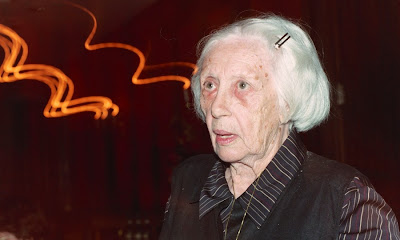
Yesterday I posted the result of a morning's work writing the first draft of my biographical memoir of Lynda. My intent is to refine this memoir and combine it with images of her, her family and her art though the years in a book that I will give to interested friends and family members.
Today, I took it down because, looking back, I see that this particular post was:
a) far too long and thus seemed to 'clog' the journal. I am trying to keep it readable, and pieces of this length are not in keeping with that philosophy, so I've taken it down. it has a place in the book I'm working on, but not here. Readers who are intrigued are welcome to write me and I'll send you a link to the full text.
b) far too raw and not the type of writing I want to 'publish' here. Though I use this space to express thoughts and feelings without constraint, in fact there are some conditions that must be met in order for the words to be readable, so to speak, and without these conditions, it would be too undisciplined. It's a fine line between writing without constraints and spewing stream-of-consciousness garbage.
This memoir is not meant to be a comprehensive biography of Lynda, nor is it intended as a complete catalog of her many works. It is a personal account of my relationship with a most remarkable woman who also happened to be my mother: Lynda Dubov.
This book and this text, illustrated with her own works, on canvas, paper and ink, is meant as a tribute to a woman of great strength, intelligence and compassion who taught me how to learn and how to conduct myself in this world.
Monday, April 7, 2008
Nano Ideas
These are some ideas I had several months back, but now that I am beginning to see the implementation of my idea, it is time to write it down, lest no one ever believe that I thought of this long before it came to pass. Well, ok, I guess three months isn't so long, but you get the idea. You read it here first.
The thought I had came from speculation about what the ideal cell phone would look like and how it might work. For one thing, I have always loved the idea of a cell phone, but have never been completely satisfied with the devices I have so far used. This is because they've been too big, or not big enough or mostly, simply too fragile to withstand the kind of everyday use I intend for them. I saw on the television yesterday that the average life of a cellphone is 18 months. That sounds about right.
Well, in the 'future' they will not even have to last more than a day. Or, say the length of time you might wear a shirt, or any other common piece of clothing. This is because the phone will actually be a part of your clothing.
I see it as being in the collar, but of course it might be anywhere in the garment. In the garment? yes, it will be woven in to the fabric, right at the factory, even before it gets made into a shirt or a pair of pants or hat or whatever. The 'phone' will actually be a nanoprocessor (ie much smaller than a microprocessor, those behemoths of the past), in the form of a very fine thread or nonofiber.
This thread will actually be composed of several nanofibers, twisted together. This combination is not only so we can manipulate the tiny fibers in the manufacturing process, but by combining several fibers into a thread, we can 'build' custom nanoprocessors that will be both specific to certain tasks (like a phone) and programmable to a certain extent so we can 'activate' it and 'tune' it to our specific frequency for secure private use, for example.
If we imagine that in a conventional microprocessor and the accompanying circuit board onto which they are mounted to allow for multiple functionalities (like audio and video), each process that is carried out is a single thread or path through the processor. Using information in the form of electricity moving at the speed of light, the device carries out hundreds of thousands of these process or threads in milliseconds, and the combination of processes is what we then perceive to be the function of the computer, like video display or audio. This much is familiar territory. Imagine though, that each process, instead of being 'pushed' through the 'general' pathways of the microprocessor, is 'extracted' in the form of a single nanofiber that performs only that process, no matter how individualized.
This seems like an extraordinary waste of material, when the microprocessor, big though it is, handles the information in a sort of generic way, like the way a calculator allows you to add up any series of numbers. But nanofibers are so small, that even if all the combinations for the calculator were extracted into individual fibers and the fibers were woven into a thread, the resulting mass would be an order of magnitude smaller than the calculator. The same thing is going to be true of micro vs nanoprocesors. The small size allows for the extraction and recombination of an almost infinite variety of processes, so that ultimately, processors could be grown to specification.
I say 'grown' to specification because I think the manufacturing process will more resemble an organic hothouse than a mechanical factory. I think that the model for how these fibers will be built and espcially recombined to form processors is DNA. Now this is the part that prompts me to write, because I had this thought, as I said, several months ago, and just last month I read that researchers at Texas A&M (of course) had performed an experiment that sounded just like what I had imagined on my own.
So, if we can call to mind the DNA helical model, we can identify a few key elements, not as specific chemical compounds, but as the 'building blocks' that interlock to form the structure of the molecule. Imagine that the nanofibers are in fact the outer 'rails' of the DNA molecule, with 'ports' formed at regular intervals. The ports are designed with specific shapes, or openings, into which the 'building blocks' or functional elements of the processor will fit.
These 'functional elements' are in fact analogs to the transistors, capacitors and diodes that are fixed in or onto a microprocessor and which are used, over and over, in different orders, as various processes are carried out. In the nanoprocessor, though, each process has it's own thread (two nanofibers plus the functional elements) that is specific to that process and no other.
The functional elements are 'custom-built' into the helical fiber in the manufacturing process. Imagine that all of the nanoelements are manufactured (for the 'how' of this, we will come back:) and dumped into a pan full of liquid. To this mixture, we add the nanofibers and stir. The liquid is electrically charged and voila, the functional elements are all 'attracted' to their 'appropriate' ports, and they interconnect because the elements themselves have ports that allow them to connect with and lock into other elements. In other words, it's like cultivating bacteria in a petri dish. With the appropriate chemistry and electrical stimulation, we will be able to manufacture devices that function in much the same way life does at the molecular level.
Now, once they are made, these threads would be collected and woven, individually or in series, into fabric that could, in turn, be worn as an article of clothing or carried as an accessory (purse, umbrella). These threads could be so inexpensive that they could be integrated into these objects even if they were never actually used. That is, they would be there should you have the need for their function but if not, well, you'd never even see them. A key ability for the user will be to 'program' or activate the processor and, more importantly, to 'tune' the device to be used exclusively by the owner/wearer.
It would work like this. The thread will be woven, let's say, into the collar of my shirt when I buy it. When I get home, if I want to make use of the cell phone function, I would, even after I put it on, if I wish, use a handheld device to connect with and activate the processor, 'program' it as a phone (ie, give it my number), then 'tune' it to the exact frequency of my aural nerve, so that only I can here the incoming sound.
Now, since every shirt will have several 'generic' or programmable threads woven into it at the manufacturing step, it is likely that most of them will never get used, or at least not for long, as they will wear out, it will be necessary to have another 'controlling' device that stores the personal data we will use to program and tune the thread as needed. This can be a very small object, 'woven' from a large enough number of threads to be not only visible, but large enough to allow them to be integrated into objects we already carry with us or have near us most of the time.
For example, the controlling device could be a part of my wedding ring, or built into my money clip. The device could go in my glasses, except I'd likely lose it way too often! Having the personal data stored thus in a small object that we have on or near or person would make it possible then to connect to the phone, or audio player in my shirt. Or, if you want to watch a video, or use the internet, you can use it in conjunction with a video display, at home, or in a cafe. Just sit down next to the display and 'tune' your device to connect with it.
Now, to be clear, my prescient observation not that nanofibers will be used to make the next generation of electronic devices, because that is obvious. No, I think the real innovation is the idea that DNA will be the model for these devices. The A&M scientists clearly concur, as their recent experiment demonstrated that DNA molecules can be used as 'molds' into which nanomaterials can be placed in order to form structures. At this point, as I understand it, the researchers have not yet made a device, but have shown that the manufacturing process will make use of the molecular structure of the helix in the formation of such devices.
Ok, it's the first step. And maybe, just maybe, they thought of the idea first. But it is proof to me, anyway, of the power of the mind to think of solutions to problems independent of the ability to test those hypotheses. In other words, I can't prove any of this now, but someday, you'll say you read it here first!
Edit 5.4.08: Nokia has some of the right ideas!
The thought I had came from speculation about what the ideal cell phone would look like and how it might work. For one thing, I have always loved the idea of a cell phone, but have never been completely satisfied with the devices I have so far used. This is because they've been too big, or not big enough or mostly, simply too fragile to withstand the kind of everyday use I intend for them. I saw on the television yesterday that the average life of a cellphone is 18 months. That sounds about right.
Well, in the 'future' they will not even have to last more than a day. Or, say the length of time you might wear a shirt, or any other common piece of clothing. This is because the phone will actually be a part of your clothing.
I see it as being in the collar, but of course it might be anywhere in the garment. In the garment? yes, it will be woven in to the fabric, right at the factory, even before it gets made into a shirt or a pair of pants or hat or whatever. The 'phone' will actually be a nanoprocessor (ie much smaller than a microprocessor, those behemoths of the past), in the form of a very fine thread or nonofiber.
This thread will actually be composed of several nanofibers, twisted together. This combination is not only so we can manipulate the tiny fibers in the manufacturing process, but by combining several fibers into a thread, we can 'build' custom nanoprocessors that will be both specific to certain tasks (like a phone) and programmable to a certain extent so we can 'activate' it and 'tune' it to our specific frequency for secure private use, for example.
If we imagine that in a conventional microprocessor and the accompanying circuit board onto which they are mounted to allow for multiple functionalities (like audio and video), each process that is carried out is a single thread or path through the processor. Using information in the form of electricity moving at the speed of light, the device carries out hundreds of thousands of these process or threads in milliseconds, and the combination of processes is what we then perceive to be the function of the computer, like video display or audio. This much is familiar territory. Imagine though, that each process, instead of being 'pushed' through the 'general' pathways of the microprocessor, is 'extracted' in the form of a single nanofiber that performs only that process, no matter how individualized.
This seems like an extraordinary waste of material, when the microprocessor, big though it is, handles the information in a sort of generic way, like the way a calculator allows you to add up any series of numbers. But nanofibers are so small, that even if all the combinations for the calculator were extracted into individual fibers and the fibers were woven into a thread, the resulting mass would be an order of magnitude smaller than the calculator. The same thing is going to be true of micro vs nanoprocesors. The small size allows for the extraction and recombination of an almost infinite variety of processes, so that ultimately, processors could be grown to specification.
I say 'grown' to specification because I think the manufacturing process will more resemble an organic hothouse than a mechanical factory. I think that the model for how these fibers will be built and espcially recombined to form processors is DNA. Now this is the part that prompts me to write, because I had this thought, as I said, several months ago, and just last month I read that researchers at Texas A&M (of course) had performed an experiment that sounded just like what I had imagined on my own.
So, if we can call to mind the DNA helical model, we can identify a few key elements, not as specific chemical compounds, but as the 'building blocks' that interlock to form the structure of the molecule. Imagine that the nanofibers are in fact the outer 'rails' of the DNA molecule, with 'ports' formed at regular intervals. The ports are designed with specific shapes, or openings, into which the 'building blocks' or functional elements of the processor will fit.
These 'functional elements' are in fact analogs to the transistors, capacitors and diodes that are fixed in or onto a microprocessor and which are used, over and over, in different orders, as various processes are carried out. In the nanoprocessor, though, each process has it's own thread (two nanofibers plus the functional elements) that is specific to that process and no other.
The functional elements are 'custom-built' into the helical fiber in the manufacturing process. Imagine that all of the nanoelements are manufactured (for the 'how' of this, we will come back:) and dumped into a pan full of liquid. To this mixture, we add the nanofibers and stir. The liquid is electrically charged and voila, the functional elements are all 'attracted' to their 'appropriate' ports, and they interconnect because the elements themselves have ports that allow them to connect with and lock into other elements. In other words, it's like cultivating bacteria in a petri dish. With the appropriate chemistry and electrical stimulation, we will be able to manufacture devices that function in much the same way life does at the molecular level.
Now, once they are made, these threads would be collected and woven, individually or in series, into fabric that could, in turn, be worn as an article of clothing or carried as an accessory (purse, umbrella). These threads could be so inexpensive that they could be integrated into these objects even if they were never actually used. That is, they would be there should you have the need for their function but if not, well, you'd never even see them. A key ability for the user will be to 'program' or activate the processor and, more importantly, to 'tune' the device to be used exclusively by the owner/wearer.
It would work like this. The thread will be woven, let's say, into the collar of my shirt when I buy it. When I get home, if I want to make use of the cell phone function, I would, even after I put it on, if I wish, use a handheld device to connect with and activate the processor, 'program' it as a phone (ie, give it my number), then 'tune' it to the exact frequency of my aural nerve, so that only I can here the incoming sound.
Now, since every shirt will have several 'generic' or programmable threads woven into it at the manufacturing step, it is likely that most of them will never get used, or at least not for long, as they will wear out, it will be necessary to have another 'controlling' device that stores the personal data we will use to program and tune the thread as needed. This can be a very small object, 'woven' from a large enough number of threads to be not only visible, but large enough to allow them to be integrated into objects we already carry with us or have near us most of the time.
For example, the controlling device could be a part of my wedding ring, or built into my money clip. The device could go in my glasses, except I'd likely lose it way too often! Having the personal data stored thus in a small object that we have on or near or person would make it possible then to connect to the phone, or audio player in my shirt. Or, if you want to watch a video, or use the internet, you can use it in conjunction with a video display, at home, or in a cafe. Just sit down next to the display and 'tune' your device to connect with it.
Now, to be clear, my prescient observation not that nanofibers will be used to make the next generation of electronic devices, because that is obvious. No, I think the real innovation is the idea that DNA will be the model for these devices. The A&M scientists clearly concur, as their recent experiment demonstrated that DNA molecules can be used as 'molds' into which nanomaterials can be placed in order to form structures. At this point, as I understand it, the researchers have not yet made a device, but have shown that the manufacturing process will make use of the molecular structure of the helix in the formation of such devices.
Ok, it's the first step. And maybe, just maybe, they thought of the idea first. But it is proof to me, anyway, of the power of the mind to think of solutions to problems independent of the ability to test those hypotheses. In other words, I can't prove any of this now, but someday, you'll say you read it here first!
Edit 5.4.08: Nokia has some of the right ideas!
Thursday, April 3, 2008
Gladys Lynda Dubov

As we prepare to honor Lynda with a memorial this May, I have gotten in touch with members of the artistic community of which she was such an active member for the past twenty years. Many of them have not yet heard of her death. Unless one reads the Statesman (we don't) it would have been easy to miss the notice. Of course, Pierre's death threw a wrench into the planning process so I never properly informed that most important group, alas.
Well, the time has come to correct that oversight, so as part of my renewed effort to plan this memorial, I've emailed the Austin Visual Arts Association (AVAA), to which Lynda belonged--off and on-- for as long as she lived in Austin. Many people knew her in only this context, so it seems fitting that we honor her in a setting that as closely resembles an art exhibit as possible, and I've asked Kelli at the AVAA if they or anyone they know has a suitable space. I envision putting up two or three of her paintings and bringing out books of her drawings and even her plays for us to recall what a wonderfully diverse intellect and artistic temperament she possessed.
My initial exchange with Kelli made me realize that I haven't posted the Lynda's obituary here in this journal yet, and, though it seems out of place in the natural order of things, not much has seemed in sync, if you will, for the past several months anyway. What follows is a copy of what was published in the Austin American-Statesman on 11/29/2007.
***************************************

Gladys Lynda Dubov passed away quietly on Thursday at the age of 90 in peace and comfort. The eldest daughter of Oglesby K. Allen, Jr. and Rosalyn Allen, Lynda was born in Chicago, Illinois on August 1, 1917.
At an early age the family moved to Biloxi, Mississippi to take over the family store. Lynda graduated high school and went almost immediately to work, first in Wheatland, Wyoming and then in Shreveport, Louisiana. In 1941 she married Jack H.L. Smith of Shreveport. Their first child, Stephen, was born in 1944. Tragically, Lt. Smith died in a Jeep accident in 1945, shortly before the birth of Lynda's second child, Anne. Though grief stricken, Lynda's resolve to make a better life spurred her to take herself, her infant children and her mother to New York City where she worked hard to support them and take advantage of all the city had to offer.
In 1954 she met Wilbur Earl ("Bill") Dubov and they were married the next year on Thanksgiving Day. A short stint in Utica, New York followed where Lynda and Bill's first child, Phillip was born. In 1955 they purchased a bookstore in Abilene, Texas and through hard work turned it into an intellectual pillar of the community. Their second child, David, was born in 1961.
Another opportunity in 1967 took them to San Antonio, Texas and then to Austin a short time later. Lynda began to pursue a long career in the insurance business as one of the first woman agents in the Southwest and gradually became very successful.
That success enabled Lynda to fulfill a lifelong dream and move her family to England where she worked to build a thriving insurance practice selling to American troops. In every spare moment she and Bill traveled extensively, visiting virtually every country in Europe as well as Egypt, Russia and China. After Bill's death in 1981, Lynda moved back to suburban New York to be near Anne, her husband Eric Shapiro, and their two children, Jennifer and Daniel.
In 1985 she packed up once again and came back to Austin where she celebrated the marriage of Phillip to Valery Caselli and witnessed the births of her grandchildren Pierre and Madeleine.
The freedom of retirement allowed Lynda to continue the great passion of her life - art. Though she had always painted and drawn, she now was able to have a studio outside her home where she could create without constraint. The studio was the source of her life energy here in Austin for more than twenty-five years. She was a member of the Art-Plex community until a fire forced her to close her studio in 2006. She was the creator of many works on canvas and paper, including the well-traveled series of pen-and-ink drawings about European Jews before the War entitled "Voices of the Ghetto". She enjoyed numerous showings of her work in New York, San Francisco, London, Dallas, Houston as well as Austin, culminating in a well-attended retrospective of twenty-five years of her work in 2005.
Lynda is survived by her children, grandchildren, her sister Anita Alden of St. Louis, Missouri and a cousin, Bernice Heller, of New York City.
Wednesday, April 2, 2008
A Scholarship for Pierre
Yesterday I called Garza High School to see about setting up a scholarship in Pierre's name. The idea was Anne's and I am grateful to her for thinking of this wonderful way to honor him. I thought it such a good one that when Leonard asked me what they could do to honor Pierre, I suggested that they contribute to the fund. I asked him to contact Anne, which he did, but of course she needs my help in setting it up from this end. I am delighted to do this, since it is such a positive step toward healing our hurt by creating what may be a lasting legacy for our son.
So, after a phone call yesterday, I received a very nice email from the guidance counselor at Garza. Yolanda's memory of Pierre was a good one, and it reminded me that he was always a good person in the company of others. It is nice to know that he touched so many lives in his short time here with us. Knowing that others are grateful to have shared some of that time with him makes me all the more thankful for the bond I have had the privilege of sharing.
It is in this spirit that I hope to establish the scholarship in Pierre's name. Garza has a special place in my heart because now not just one, but three of my 'boys' have been there, and hopefully the third, Dean, will soon be making his 'star walk'! Years ago, I also saw Shawn M. (now known as Trevor G.- he changed his name officially) through the halls of Garza. Though Trevor and I lost touch as I devoted my energies to Pierre, Trevor wrote me a note recently, just to let me know how much he'd appreciated my support and concern through those years. He's now a student at ACC, studying Geology!
So, I do know that Pierre was the exception, not the rule. If we can just get them out of school and onto the road of life, these students will, more often than not, find their way. I have hope for the many other good young people who are struggling to get their lives together, and will create this scholarship, with the help of family and friends, to support at least a few high school students in their endeavors to achieve their goals.
So, after a phone call yesterday, I received a very nice email from the guidance counselor at Garza. Yolanda's memory of Pierre was a good one, and it reminded me that he was always a good person in the company of others. It is nice to know that he touched so many lives in his short time here with us. Knowing that others are grateful to have shared some of that time with him makes me all the more thankful for the bond I have had the privilege of sharing.
It is in this spirit that I hope to establish the scholarship in Pierre's name. Garza has a special place in my heart because now not just one, but three of my 'boys' have been there, and hopefully the third, Dean, will soon be making his 'star walk'! Years ago, I also saw Shawn M. (now known as Trevor G.- he changed his name officially) through the halls of Garza. Though Trevor and I lost touch as I devoted my energies to Pierre, Trevor wrote me a note recently, just to let me know how much he'd appreciated my support and concern through those years. He's now a student at ACC, studying Geology!
So, I do know that Pierre was the exception, not the rule. If we can just get them out of school and onto the road of life, these students will, more often than not, find their way. I have hope for the many other good young people who are struggling to get their lives together, and will create this scholarship, with the help of family and friends, to support at least a few high school students in their endeavors to achieve their goals.
Monday, March 31, 2008
The Flood of Words

It is a phenomenon that began for me as Lynda's death approached last year and has not only continued but has done so with great force. I am talking about my newly re-discovered passion for writing. This journal is in itself some evidence of that, but unseen here are the many poems I've written and the handwritten journal I've been keeping daily since Pierre died. It's almost as if there are simply too many words built up in the back of my brain, calling for release, they require me to write in almost all of my 'spare' time. It seems that whenever I have a minute, or even if I don't (I am at 'work' right now) I am compelled to write something, as if the words will not let me escape nor allow themselves to be repressed as they were for so many years.
What I find happening now is the release of the creativity that I have long sublimated to the service first of my mother then of my son. Now freed of those twin obligations, I can actually concentrate long enough to bang out a paragraph or two, a poem or two and the liberation is delightful. Would that I could have remained mute and focused my efforts on helping Pierre, but now that that is no longer an option for me, I find I have little to impede me from writing as much and as often as I am able. If I have any real hope left, it is for my life to find meaning in words, and to leave behind some words that will serve others and perhaps recall me to them in some not-so-distant future.
So now there are in my head and on my desk all sorts of journals, poems, plays and plain old stream-of-consciousness blather. It is all coming out now. All I need do now is to improve as I write, to hone the edge and cut through to the resonances that will ultimately prove the worth of my work. In spite of the long odds and lack of immediate reward, I am committed to creating an identity for myself as a writer.
I've also committed myself to reading as well. I have begun to explore the world of poets and the tradition to which I wish to contribute and belong. I see that I have much to learn, but find that I have much to say that still has not been said. There is a world today that didn't exist for Yeats or Keats or Milton or even Ginsburg, and this is the world that I will envision and reflect. It is pointless to speak of modernism, so rapidly do things change in this modern world, but it is possible to hope that my work will reflect both what is new about my world as well as what is unchanged since Homer. There are old resonances to explore and new words to put to paper, but these will be hard to understand and eventually overcome without the context that reading brings me.
I feel as if I am re-born into the world of words, and begin this year as a child first learning to read an write. There is much to be done and I am here to do it!
Thursday, March 27, 2008
Time for Thanks
Well, after re-reading my previous post, it seems that what was undertaken as an expression of my desire to save my loved ones from pain actually came off as a rather selfish move to gather in all the grief to myself. What I had hoped was a desire to spare the ones I love and who love me the pain of separation, was in fact a move to deny the others who loved Pierre the opportunity to feel the pain that they should rightly feel in his absence, and for this I apologize.
Though I obviously often forget some basic human courtesies, especially when writing, my goal is not necessarily nefarious and I know that no one sees it as such. In fact, if anything, I have so far not managed to state it clearly, so here goes.
It does seem to me most natural to allow for a pain that no one should be able to usurp; to each his or her own moment of grief and for each to find a way of living it. On principle, I would not presume to take this from anyone, and, but for the fog that surrounds me and prevents me from making good judgments of late, would promise to hold to that principle. Doubtless I will cross the line again, but it helps to know where it is. I'll keep my eye out for it.
What I haven't done enough of, here in this journal, nor especially in 'real' life, is to say 'thank you' to all the family and friends who have supported us emotionally since Pierre died. So many people just opened their hearts and made their way to our house during those first few days, I cannot accurately recall them all. Believe it or not, there are times when I have to ask Valery if someone was at the wake just because I can't, with certainty, recall the memory of that day, or even, unfortunately, that whole month.
This thought is relevant not simply because I find myself thinking about that day often, which I do, but because yesterday was the first day that I've sat down to try and make a list of people who deserve thanks for their love and support. The stack of cards is quite large, a testament to the caring quality of our relations, whether they be by blood or not. The list of attendees at the wake was an equally impressive measure of the love that so many people felt for Pierre and continue to feel for us.
Though I haven't actually begun to write the thank-you cards, it is nice to know that I've got the list ready. Desiring, as I do, to write each person an individual recognition of their thoughts and thanks for their sympathies, it will doubtless take some time to get through the list, but it will thus remind me of the gratitude I have yet to fully express.
Though I obviously often forget some basic human courtesies, especially when writing, my goal is not necessarily nefarious and I know that no one sees it as such. In fact, if anything, I have so far not managed to state it clearly, so here goes.
It does seem to me most natural to allow for a pain that no one should be able to usurp; to each his or her own moment of grief and for each to find a way of living it. On principle, I would not presume to take this from anyone, and, but for the fog that surrounds me and prevents me from making good judgments of late, would promise to hold to that principle. Doubtless I will cross the line again, but it helps to know where it is. I'll keep my eye out for it.
What I haven't done enough of, here in this journal, nor especially in 'real' life, is to say 'thank you' to all the family and friends who have supported us emotionally since Pierre died. So many people just opened their hearts and made their way to our house during those first few days, I cannot accurately recall them all. Believe it or not, there are times when I have to ask Valery if someone was at the wake just because I can't, with certainty, recall the memory of that day, or even, unfortunately, that whole month.
This thought is relevant not simply because I find myself thinking about that day often, which I do, but because yesterday was the first day that I've sat down to try and make a list of people who deserve thanks for their love and support. The stack of cards is quite large, a testament to the caring quality of our relations, whether they be by blood or not. The list of attendees at the wake was an equally impressive measure of the love that so many people felt for Pierre and continue to feel for us.
Though I haven't actually begun to write the thank-you cards, it is nice to know that I've got the list ready. Desiring, as I do, to write each person an individual recognition of their thoughts and thanks for their sympathies, it will doubtless take some time to get through the list, but it will thus remind me of the gratitude I have yet to fully express.
Tuesday, March 25, 2008
Relative Grief
Gentle reader, I am not sure how these dark thoughts come to me, or why I subject you to them here, but I guess it must be an attempt to put my loss into perspective. It's a macabre sort of self-torture, almost like picking at a scab. It hurts and I know I shouldn't do it, but I am nonetheless compelled to obsessed on the subject for a while, at least, and writing about it here does indeed help. I've edited this a bit to make it less dark and brooding, though enough remains to make this an easy post to skip.
Lately I've been wrestling with the idea of relative grief. One of the most difficult aspects of dealing with Pierre's death has been seeing the terrible toll that his loss imposes upon our family and friends.
Because I am his father, it seems natural enough that I should have to bear the heartache of losing my son. What I did not realize at first is that, however unfair it may be, it is also natural that many others would have to feel pain on my behalf. Selfishly, I ask, "After all, is not a father's anguish enough? Why must so many suffer?"
But that's a self-serving argument and my point here is not to be noble or self-sacrificing. I can't help wondering, even as I contemplate the many who suffer needlessly from Pierre's death, how this loss and my grief compare to others. Relatively speaking, things are just not that bad. I know that there are many, many parents who have not only lost a son, but whole sets of children. There are fathers who have buried their whole families on a single day. Then there are the circumstances of death. I know that there are many fathers who have had to endure far worse.
On the other hand, simply knowing that that the river of grief is as deep as it is wide is of no comfort. I do not know if I will be able look at the world in the same light again. This does not mean my world is unlit. Far from it. I have much to be thankful for and to look forward to with Valery and Maddie and the rest of our family. So many people came to embrace us with love and sympathy that I am just now realizing how much we are loved by so many, and I'm deeply grateful to and for our family and friends.
Lately I've been wrestling with the idea of relative grief. One of the most difficult aspects of dealing with Pierre's death has been seeing the terrible toll that his loss imposes upon our family and friends.
Because I am his father, it seems natural enough that I should have to bear the heartache of losing my son. What I did not realize at first is that, however unfair it may be, it is also natural that many others would have to feel pain on my behalf. Selfishly, I ask, "After all, is not a father's anguish enough? Why must so many suffer?"
But that's a self-serving argument and my point here is not to be noble or self-sacrificing. I can't help wondering, even as I contemplate the many who suffer needlessly from Pierre's death, how this loss and my grief compare to others. Relatively speaking, things are just not that bad. I know that there are many, many parents who have not only lost a son, but whole sets of children. There are fathers who have buried their whole families on a single day. Then there are the circumstances of death. I know that there are many fathers who have had to endure far worse.
On the other hand, simply knowing that that the river of grief is as deep as it is wide is of no comfort. I do not know if I will be able look at the world in the same light again. This does not mean my world is unlit. Far from it. I have much to be thankful for and to look forward to with Valery and Maddie and the rest of our family. So many people came to embrace us with love and sympathy that I am just now realizing how much we are loved by so many, and I'm deeply grateful to and for our family and friends.
Friday, March 21, 2008
Thoughts of Lynda

Today is Easter, and oddly, with this earliest of high Christian holidays that I can recall, come thoughts of Lynda. Seemingly forgotten in the rush of events that began with Pierre's death, thoughts of her that have lingered in the back of my brain are bubbling up, and it is time to pay some attention to the life she lived and the person she was. I cannot lose sight of how much she meant to me nor forget the things she taught me, so it is time to move forward.
I--we, the whole family--had planned, but just tentatively, to have a memorial for Lynda in the spring, and even with the lost month of February somehow miraculously regained, would have not had enough time to figure out what would best best and most fitting.
There are many details to be worked on, but on one we have agreed on is the date: May 13. David will be in town with David and Anne and Eric will come down from New York. Though there are a number of people on the 'guest' list, it is of most interest to her children and the cousins who knew her well, and will bring a closure for us all, if such things are possible.
I for one, am of course, still torn apart by Pierre's death and so cannot quite yet distinguish between the grief I feel for him, the grief I feel for Lynda, and, quite honestly, the depression I have experienced for what seemed like the longest year of my life. So 2007 remains an awkward blur, full of painful details best repressed if never forgotten, and I am still waiting for the tears to come. Perhaps they will not.
The Final Year
The final year
was a
long goodbye.
The final fear
was of
life gone by.
The final tear?
Frozen,
in my eye.
The final year
was a
long goodbye.
The final fear
was of
life gone by.
The final tear?
Frozen,
in my eye.
Thursday, March 20, 2008
Portland: II
 |
| From Portland |
This is the smile that Maddie wore pretty much the whole time that we were in Portland, especially when in consideration of the parts that involved actually going to school, like seeing the kitchens, or, in this case, window-shopping at a fancy cooking school store across the street from the Institute.
I didn't get to all the topics I wanted to cover in my last entry, and though it's clear I won't get to all of it this morning, I do want to remind myself and readers of this journal, of Maddie's enthusiasm about attending the Culinary Institute and her consequent determination to get there and work hard with the photos here and in the online album.
 |
| From Portland |
My concerns for her ability to cope are soothed a bit now that I am home in the evenings to work with her on school more closely. I see not an inability to perform tasks, even well, but, as always, it is the interest factor that is missing from this part of her formal education.
I worked with her on her government project and my word, it makes even me, who is something of a political fan, bored by the subject! She actually helped me by suggesting a way to work through the definitions faster. She looked them all up in advance, then read and summarized them for me as I typed them up for us later in the project. Her tutor, Claire, is coming over today to help her work on it. My assignment today is simply to get the printer ink:)
Now, I certainly wish and even think I could have done better in terms of her basic education, but for the most part, I have tried to let her find her way though the maze with as little hindrance as possible. This was, perhaps, a mistake, but when I see her enthusiasm for Culinary School and couple it with my knowledge of her ability to make practical choices, I am encouraged to believe that when she lifts her wings to leave for Portland, they will find the air to help her fly.
Monday, March 17, 2008
Portland: I
 |
| From Portland |
We went to check out the Western Culinary Institute (WCI), where she'll be pursuing a 'Patisserie and Baking Diplome'. It is the first step in what she hopes will be a career in the kitchen. I certainly was there to be convinced that this school was the real deal, so to speak, and not just because I had not yet had a chance to give it the old 'smell' test. Someone had recently raised concerns to me about the credibility of the institution and I wanted to be certain that this was the right choice for Madelaine.
 |
| From Portland |
Fortunately, the school more than passed any test Maddie had for it. It certainly satisfied me that it is not only a 'real' school, but a good one at that, one capable of giving her the basic training she's looking for and some opportunities to get experience. This she can do both by working while going to school, and in the 'Externship' that comprises the last six weeks of her nine-month education. In fact, we learned that she can do the externship anywhere, so she might even return to Austin for that.
 |
| From Portland |
The WCI occupies the top two floors of a large building in downtown Portland. It turned out to be only two block from our wonderfully hip little Ace Hotel. The school is also very close to the downtown stop for the light rail trains (MAX) that she'll be using to commute to and from Beaverton, which is where she'll likely live. Maddie had an ear-to-ear smile on her face the whole time that we were in the school. She beamed constantly while touring the six or eight kitchens and prep areas that she'll be using/seeing during her time there. We saw the pastry and candy/chocolate kitchens are where she'll spend most of her time, but we also saw the other line kitchens, where she'll also come into contact with a variety of students of all ages and and from many places.
Maddie? She's scared and excited and yet outwardly calm, as always. She has the ability to compartmentalize her fear so that it doesn't overwhelm her into reversing her decision to do something. From one vantage point, this is called stubbornness, but from another, it can be seen as the ability to focus on a goal. This might seem to many a low-level goal, but I believe that this determinedness turns out to be a very valuable coping skill. It won't be easy, but I believe she will make it. And I'm not just talking about 'making it' in school. Living on her own is another task she faces with seeming fearlessness, though we did in fact do some work to lower, at least, my anxiety level about where she'll live and how she'll get to and from there.
 |
| From Portland |
The second day, we actually took the MAX out to Beaverton, as recommended by the Katie, the WCI guidance counselor, for a walk-about. We got the numbers for several apartment complexes within walking distance of the Beaverton stop.
 |
| From Portland |
 |
| From Portland |
So, we'll see, of course. First on the list, though, is graduation from High School, and there is no absolute guarantee of that! With the help of her guidance counselor, Ms. Ferris, and her tutor, Claire, plus my efforts now that I am home most evenings, I think we/she should make it. In fact, I am betting on it. Maddie is the type of person who manages to push forward, get up and go in, almost no matter the day or mood. This, though it is not a particularly glamorous trait, is a positive attribute that will serve her well as she figuratively spreads her wings and literally leaves the nest for the first time.
Sunday, March 9, 2008
Weddings and Funerals

Readers of this journal who have come expecting gloom today will be disappointed, for though I am in a particularly bad frame of mind, it may be just the right time for observing some very black humor.
I know! Let's go to a party. This weekend, it was a wedding for my best friend, Henry, to his best friend, Glenda. It was a great wedding. First of all it was short. The ceremony didn't last more than about seven minutes, according to those digital photographers who must measure their pixel memory in seconds elapsed. Suffice it to say that it was both simple and exquisitely elegantly done. The food was good, the wine delightful and the toasts both short and appropriate (I even made one:) In sum, the party itself was perfect; relaxed and unfettered by the many complications that often infect and affect first (and, sadly, even second) weddings.
But there's this too. Do as we've just done, and go have a party. Remember, assemble only those friends and family whose presence truly adds meaning to your life, eat well, drink sufficiently and in doing so, raise a glass to better times to come. Most excellent, but change the crepe paper from white to black and it is a funeral instead of a wedding. Party on!
It seems to me that we humans come together to embrace one another and love each other and laugh with each other for the most trivial and unmemorable of reasons every day. But there are certain days which are neither trivial nor unmemorable. Curiously, though, it seems to me that in their most basic outline, the frameworks of these events can hardly be distinguished from their causes. It's a party, and whether the attendees be happy or sad is almost immaterial. Give us a reason, any reason will do, to get together for some food and drink we are there! It's occurred to me that the reason that peace talks are so often held in Geneva or Paris is so that the participants can at least get some good food and wine out of the ordeal.
Of course, I'd rather attend a wedding than a funeral, or god forbid, peace talks, even if they were in Paris. More to the point of this essay, is the not simply the fact that I was privileged to be invited to Henry and Glenda's nuptials, but that I am pleased that my friends have found each other's embrace to be enduring. The most important thing that their wedding ceremony has brought back to my mind is that the assembly of love and the living embrace of individuals makes of any celebration a declaration of the things we truly know, life and love.
Oh, and food and wine.
Saturday, March 8, 2008
Why Write?

As a writer, I have decided that I need to practice my art in many forms, and practice reading even more. Making the decision to re-create myself as a poet is more than an assertion that I need to write, but it is actually a declaration of my intent to learn to read and write all over again. I some ways I feel like the amnesiac who must re-learn all of the basics just to be able to live a normal life again.
Interestingly, it's not Pierre's death that has so crippled my writing and reading abilities, but rather long years of purposeless neglect. Looking back, I have to say that if I failed to write, it was not the sacrifice I thought it was going to be. The failure was not in devoting my waking life to my family and jobs, but that I should have used at least some more of that time to read and write and express tthose passions with my family. I did this intermittently, but now realize that I should have done more of it; for them, with them.
With Maddie leaving and Pierre gone forever, it seems I've missed my chance to tell them that I am a writer. For them, the many mere words I've mumbled over the years should/could have been much more than that. However, I still have hope. If I can now manage to get some of those words out, written down now rather than mumbled, they will begin to form a body of work, from which I may indeed find my voice, and use that voice to call out the words of love, pain and passion that have since forever rattled around in my brain.
So, all that to say that this journal is just a part of my new direction and one result of my effort to become the poet I know myself to be. I must also keep a daily journal, and now, I've come to realize that I must re-learn to write actual letters. Of course, I'll now forever be an e-child but there is something elemental about writing words on paper with a pen and ink, then sending same to someone who will not just read it, but may actually save it; re-read it and remember the author in the words held so close.
Writing, if I am to be serious about it, must be more than a hobby. It must become the object of my intellectual purpose and the best hope I have for actually contributing something to this tradition to which I aspire.
Subscribe to:
Posts (Atom)